
How Long Does It Take to Learn to Fly in Los Angeles? 2026 Timeline

Published by:
Ari Hovnanyan
Published on:
Updated on:
Read time:
9 min read
You are ready to start flying lessons, but there is a number you cannot find anywhere: how long this will actually take. Every school answers with a range wide enough to drive a truck through, and none of them tell you what makes the difference between the fast end and the slow end.
Here is the honest version. Your finish date is set less by talent than by how often you show up. Two students can start the same week with the same instructor in the same airplane, and one earns a private pilot certificate in four months while the other is still working on cross-countries a year later. The variable that separated them was the calendar.
This guide walks the real timeline from your first discovery flight to your checkride, including the two paperwork gates that quietly delay more students than weather does.
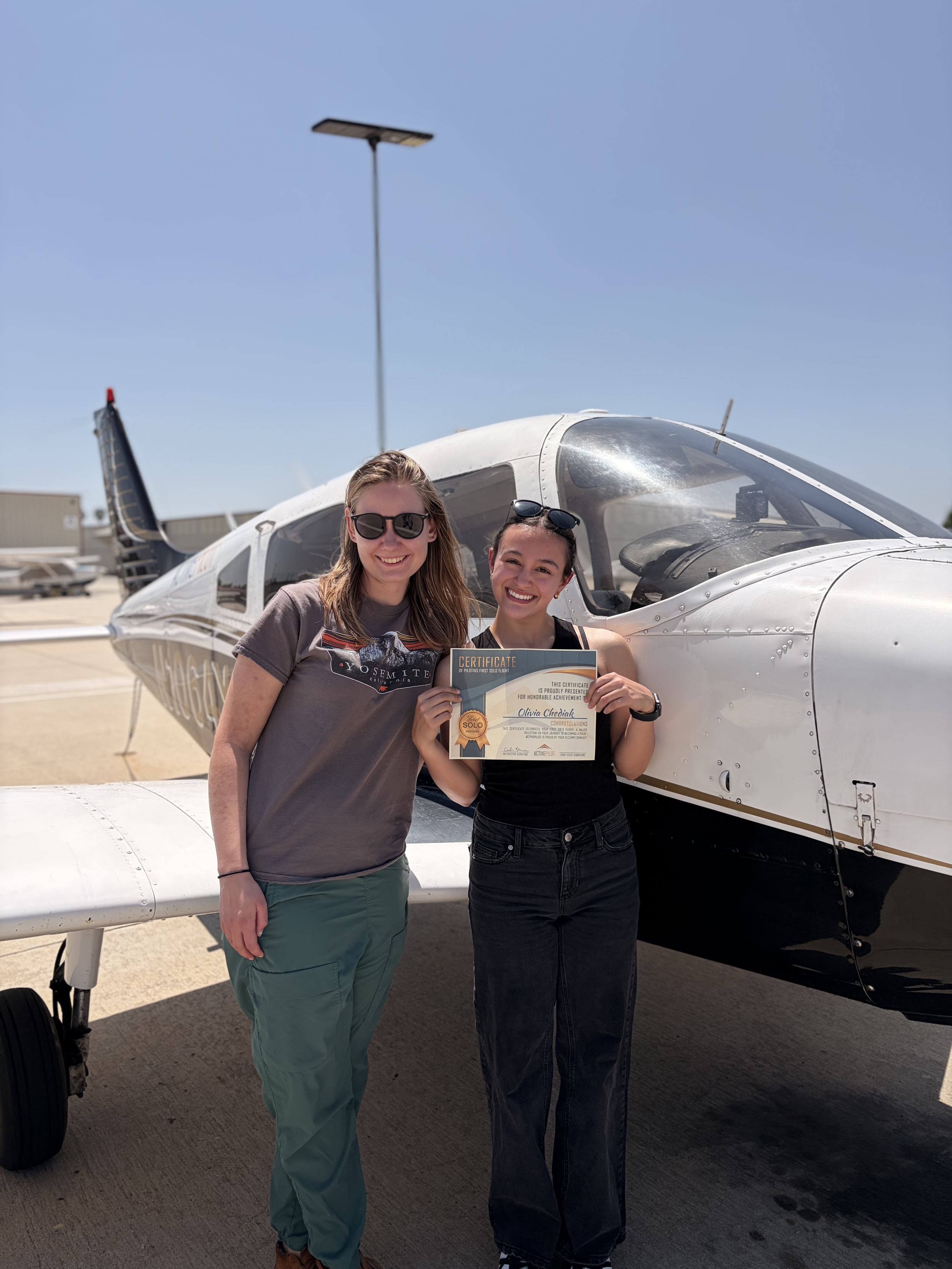
The Short Answer, and the Number Behind It
For most of our students, a private pilot certificate takes three to six months of consistent training. Consistent means flying two to three times a week.
The number underneath that: the FAA sets a 40-hour minimum for a Part 61 private pilot certificate, and reports that the U.S. average for completion is closer to 75 hours. Read those two figures together and the picture gets clear. Forty is a regulatory floor. Seventy-five is what happens to a typical student in the real world, and the distance between them is mostly made of gaps between lessons.
Every time you go two weeks without flying, the first twenty minutes of your next lesson become review. You are paying aircraft and instructor time to get back to where you already were. Do that eight times across your training and you have bought yourself several extra hours and pushed your checkride out by a month.
Your Timeline, Week by Week
Here is how the training actually sequences at Van Nuys, assuming you fly two to three times a week.
| Phase | What you are working on | Typical window |
|---|---|---|
| Discovery flight | Deciding whether this is for you | Week 1 |
| Paperwork | Student pilot certificate and FAA medical | Weeks 1–6 |
| Pre-solo training | Takeoffs, landings, airwork, radio, emergencies | Weeks 2–12 |
| First solo | Three takeoffs and landings, alone | Around weeks 8–16 |
| Cross-country and night | Navigation, longer flights, solo cross-countries | Months 3–5 |
| Written test | FAA knowledge test | Anytime after ground study |
| Checkride prep | Polishing to standards with your instructor | Final 3–4 weeks |
| Practical test | The checkride with a DPE | Months 3–6 |
Those windows overlap on purpose. Ground study, the written test, and flight training run in parallel, and students who treat the written as a background task instead of a final hurdle finish noticeably sooner.
The Two Gates That Delay Almost Everyone
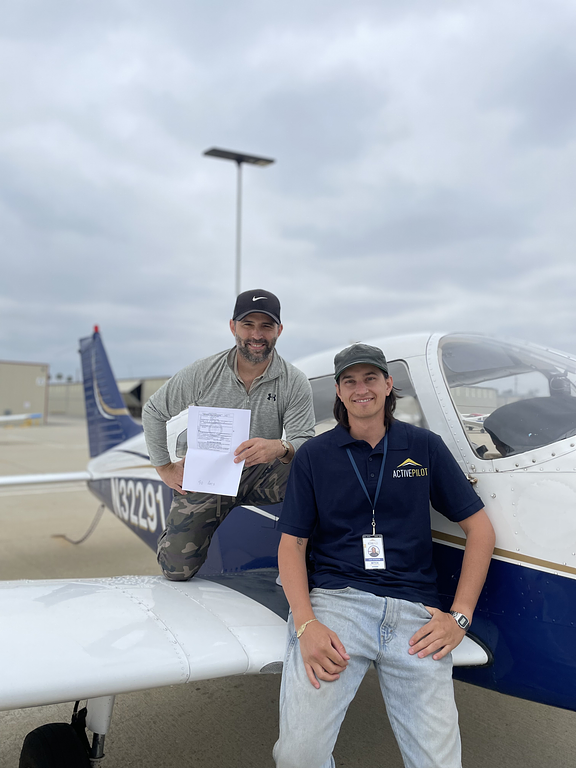
Weather gets blamed for slow training. In our experience the real culprits are two pieces of paperwork that students postpone because flying is more fun.
Your FAA medical certificate. You do not need one to take a discovery flight or to start lessons. You do need one before you fly solo, and for most airplane students a third-class medical is sufficient. The trap is timing: students discover the requirement the week their instructor says they are ready to solo, then wait for an appointment with an FAA-authorized Aviation Medical Examiner. Book that exam in your first two weeks and it never becomes a problem. If you have any question about your own eligibility, an AME is the right person to talk to — that conversation is theirs, not ours.
Your student pilot certificate. Also required before solo, also not required to start lessons. You apply through IACRA, and processing takes time you should spend flying rather than waiting.
Handle both in month one and your first solo lands when your flying is ready, not when your mail arrives. Our student pilot requirements page walks through the paperwork in order.
How Your Weekly Cadence Changes the Finish Date
This is the section we wish every prospective student read before booking.
Three or more flights a week. You are in the airplane often enough that every lesson builds forward. Skills stay warm, the written gets knocked out early, and a private pilot certificate in three to four months is realistic.
Two flights a week. The sustainable sweet spot for most working adults. Progress is steady, review time is minimal, and four to six months is the normal landing zone.
One flight a week. Workable if it is genuinely every week. Expect six to nine months, and expect to spend a little more overall because each lesson opens with warm-up.
Less than one flight a week. This is where training stalls. Skills fade between lessons, the total hour count climbs, and motivation follows the progress. If your calendar only allows this, we would rather help you plan a start date you can actually commit to than watch you drift.
Weather, maintenance, aircraft availability, and checkride scheduling all still apply. Nobody controls those. You control the cadence, which is why we keep pointing at it. Our flight training in Los Angeles page breaks down each program alongside its typical schedule.
Why Los Angeles Training Time Is Well Spent
Van Nuys is a towered airport, and that shapes what your hours buy you.
At a quiet field, early lessons focus almost entirely on flying the airplane. Here you are also working the radio, following ATC instructions, and fitting into a traffic pattern with other aircraft in it. It feels like more to manage in month one because it is. By month three it means you are comfortable somewhere many pilots are still nervous.
The rest of what makes an hour productive is on us. We fly the largest Piper Warrior (PA-28) fleet at Van Nuys, all with Garmin glass avionics, so you are not adapting to a different panel every booking. Active students also get free simulator access to drill flows on the ground between lessons — practice that keeps your aircraft time focused on flying rather than procedure review. You can read more about how we use it on our simulator training page.
On cost: your total moves with the same lever as your timeline, so the students who finish sooner generally spend less. Current program estimates are on our pilot license pricing page, we bill pay-as-you-go rather than taking a large upfront deposit, and financing options may be available to qualified applicants through Stratus Financial, AOPA Financing, and Columbia Bank.
Start the Clock With a Discovery Flight
Every timeline in this guide starts on the same day: the one where you actually get in the airplane. Until then you are estimating, and estimates have a way of stretching into another year of thinking about it.
Our $249 discovery flight gives you a 15-minute pre-brief, 45 minutes of flight time with your hands on the controls, and a 15-minute debrief with a certified instructor. The flight is logged toward your certificate, so your timeline begins the moment you land. You will leave with a straight answer about what your schedule can realistically support.
Book your discovery flight at Van Nuys and put a real date on the calendar.
.B93hxYof_19tRkW.webp)

.CCh9zi8h_Zkhw5v.webp)


