
Multi-Engine Rating in 8 Days: What Each Stage of the Course Looks Like in 2026

Published by:
Ari Hovnanyan
Published on:
Updated on:
Read time:
8 min read
You have a commercial certificate, a job target that mentions multi-engine time, and a calendar that does not have weeks to spare. The question you type into a search bar is simple: how many days does a multi-engine rating actually take? The honest answer depends on how the course is built, and a course built well can be finished in about a week.
At ActivePILOT, our multi-engine program is an 8-day accelerated course at Van Nuys Airport (KVNY). Here is what fills those eight days, stage by stage, so you can plan around it.
The Short Answer Starts With What a Multi-Engine Rating Is
A multi-engine rating is an add-on class rating. You already hold a pilot certificate, and the rating adds the privilege to fly airplanes with more than one engine. It builds on what you have earned, and it is not a separate license, which is why a certificate holder can add it quickly.
That is why the course can be short. You are not learning to fly from scratch. You are learning what changes when a second engine is on the wing, and what you do when one of them stops. Our multi-engine rating program is built around exactly that difference.
You need to hold at least a private pilot certificate to start, and you need the required endorsements from an authorized instructor before the checkride. There is no FAA written exam for this add-on rating, which removes one of the biggest time sinks from most training plans. Study time goes toward flying skills instead of test prep.
Stage One: Ground School Gets You Ready Before the Engines Start
The first stage is 8 hours of ground school. It covers aircraft systems, single-engine aerodynamics, and weight and balance. This is where the twin starts to make sense on paper before it makes sense in the air.
Single-engine aerodynamics sounds like a contradiction in a twin-engine course, but it is the heart of the rating. When one engine quits, the airplane is flying on a single engine and the thrust is no longer centered. Understanding why the nose wants to swing toward the dead engine is what lets you correct it calmly, and it is the question an examiner is most likely to explore on test day.
Weight and balance carries more weight in a twin, too. Fuel, passengers, and bags all change how the airplane behaves with one engine out, and your instructor will walk you through the numbers for the Twin Comanche you will fly. Doing that math on the ground, with a pencil and a calm head, is much cheaper than discovering it in the air.
Stage Two: Online Videos Let You Learn at Your Own Pace
Alongside ground school, you work through 5 hours of online videos. They reinforce the fundamentals and the concepts that matter most in multi-engine flying, and you can watch them on your own schedule, a few at a time or all in one evening.
This stage is where a lot of time can be saved. If you finish the videos before day one, your in-person hours go to flying and briefing instead of catching up. If you already hold a commercial certificate, much of the material will feel familiar, and you can move faster through it. Treat the videos like pre-flight homework: an hour a night adds up quickly.
We also give active students free access to our X-Plane simulator. Running through checklists and engine-out flows on the ground costs far less than rehearsing them in the airplane, and the repetition builds the habit you want when the real maneuver arrives. Details are on our simulator training page.
Stage Three: Flight Training Is Where Eight Days Gets Real
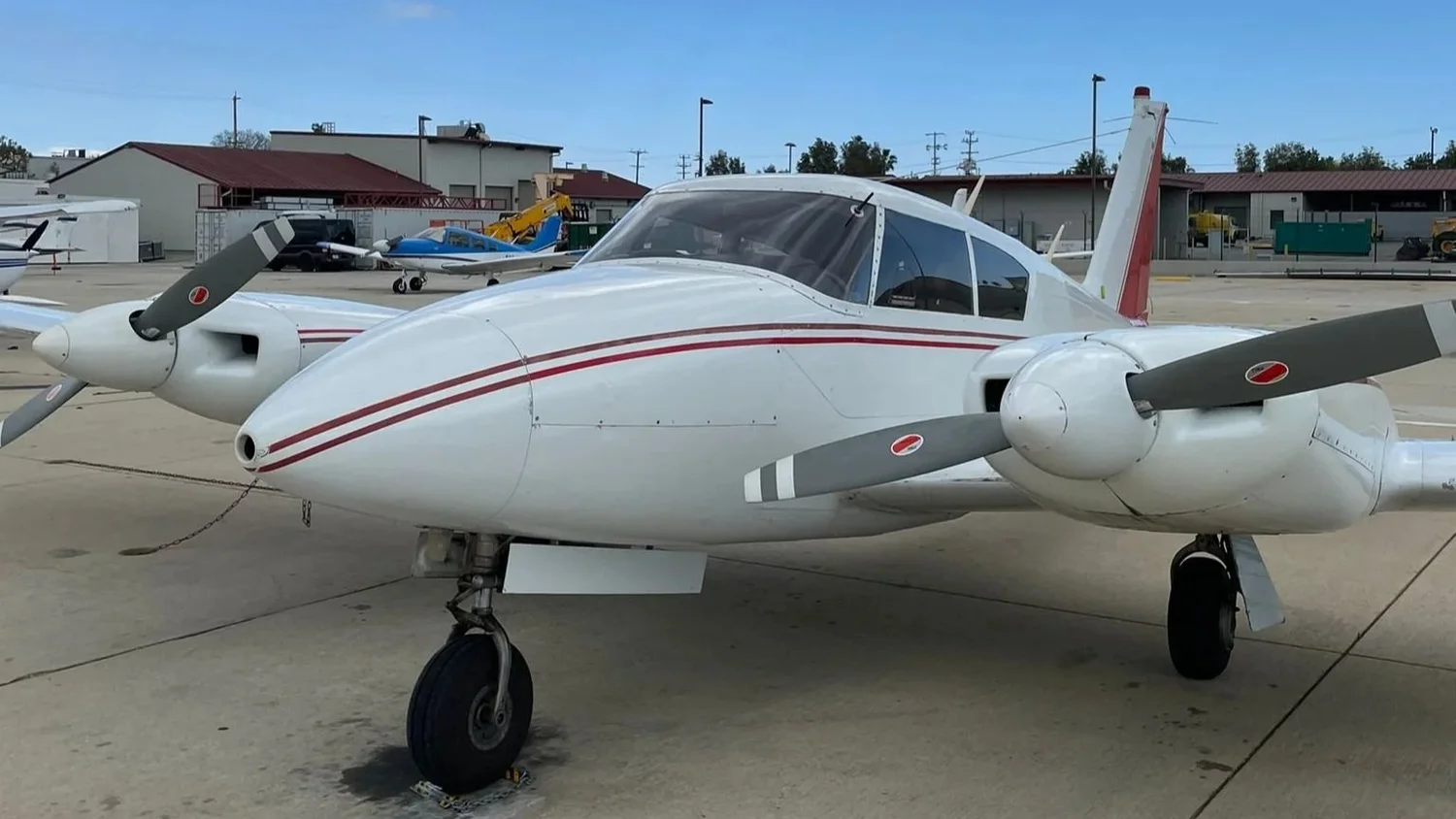
The flight stage is built from 8 hours of dual flight instruction and 9.5 hours of aircraft rental. The flying covers normal and emergency multi-engine operations and the maneuvers you will be tested on, and the checkride flight portion is included in that total.
Those hours are the program’s structure. Individual students sometimes need more or less time in the airplane depending on proficiency, and your instructor will tell you where you stand as you go, so there are no surprises when the checkride approaches.
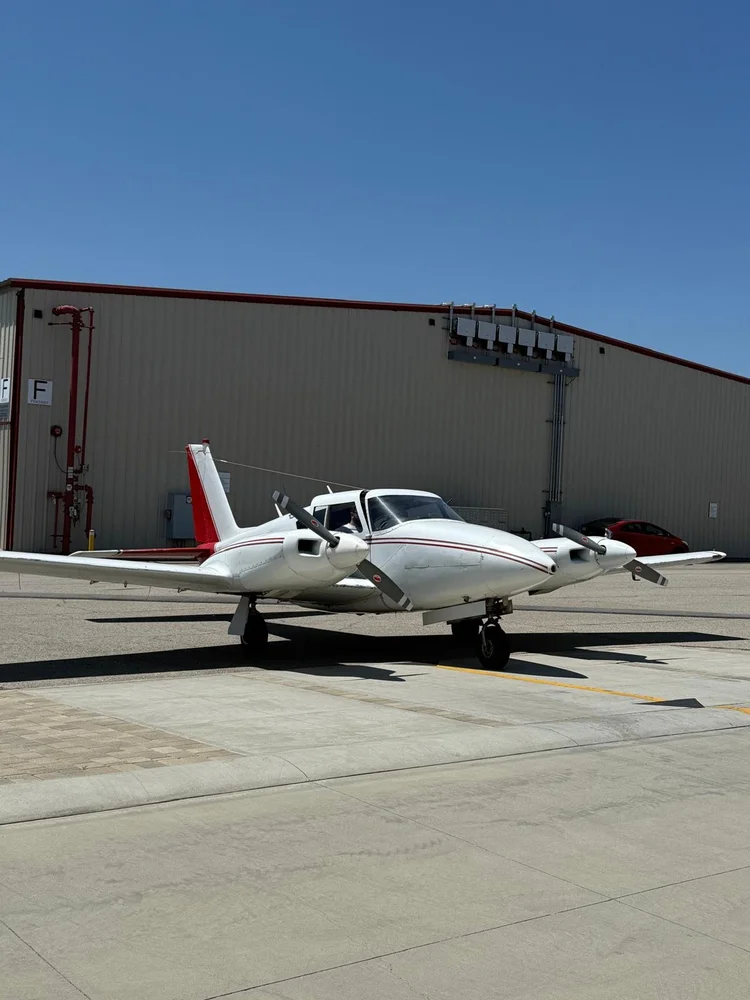
You will fly our Piper PA-30 Twin Comanche, N7738Y, a 1965 twin equipped with a Garmin GNX 375, a Garmin 345 audio panel, and a GI-106A VOR indicator. It rents for $320 an hour. You can read more on the Twin Comanche’s page.
Here is what the first time in the cockpit feels like. You settle in and face dual throttles, two propeller levers, and two mixture controls. Your instructor talks you through a start, a taxi at Van Nuys, and a takeoff with a tower controller in your ear. Then, at a safe altitude, you practice the maneuvers that define the rating:
- Engine-inoperative procedures: identifying a failed engine, verifying it, and feathering the propeller.
- Vmc demonstrations: seeing how minimum control speed works when one engine is out.
- Single-engine approaches and landings: flying a pattern at Van Nuys with only one engine producing power.
Repetition is the point. Each pass builds the habit of checking, confirming, and acting in order, so the real checkride maneuver feels familiar. By the time you reach test day, the sequence should feel like something you have done many times, because you have.
Stage Four: The Checkride Closes the Course
The last stage is the checkride, a practical test with an FAA examiner. You act as pilot in command of a multi-engine airplane and show that you can handle normal operations and emergencies against the FAA standards.
An examiner conducts an oral portion and a flight portion. The oral part covers aircraft systems and performance. The flight part covers the maneuvers you have practiced. If you want a closer look at test day, our guide to the multi-engine checkride walks through it.
How the Eight Days Fit Around Your Own Schedule
Eight days does not mean eight identical days. The four stages overlap, and a good plan puts the reading and the simulator work first, so the flying days are short and focused. Lining up your ground school and videos in the days before the first flight leaves the remaining days for flying and the checkride.
Your starting point sets the pace. A pilot who just finished a commercial certificate brings fresh checklist habits and recent maneuver practice. A pilot who has not flown in a few months might spend a little more time getting the airplane feel back before the twin work begins. Neither path is wrong, and an honest conversation about your recent flying helps us plan.
If you are planning around a job or a trip, tell us your open dates when you reach out. We will help you shape the course around them. Our guide to a 3-day multi-engine rating explains why we plan for eight days rather than three.
Four Ways Students Lose Days Without Realizing It
Most delays in a short course come from small things that pile up. Knowing them in advance keeps your eight days at eight.
- Arriving without the right certificate in hand. Bring your pilot certificate and a current medical so nothing stalls on day one.
- Skipping the videos. Five hours of watching is easy to put off. It is also the cheapest time you will spend.
- Starting without a recent flying routine. A short refresher flight in the weeks before can save time in the Twin Comanche.
- Booking the checkride too tight. Leave room between your last flight and the examiner so a weather day does not break the plan.
If you are adding the rating right after your commercial checkride, our commercial pilot program team can help you plan the two back to back.
What the Course Costs and How to Pay for It
The program investment runs $4,440 to $4,850. You can see how that number breaks down in our multi-engine rating cost breakdown, including aircraft time, instructor time, and the checkride.
We bill pay as you go, so you cover the instruction and aircraft time you use after each lesson, with no large deposit up front. If you would rather spread the cost out, our financing partners include Stratus Financial, AOPA Financing, and Columbia Bank.
Frequently Asked Questions
How many days does the multi-engine rating take?
Our accelerated course is built to be completed in 8 days. The four stages are ground school, online videos, flight training, and the checkride, and your own proficiency can change how much flying you need. You can see the full structure in our multi-engine rating program.
Do I need an FAA written exam?
No. There is no FAA written exam for this add-on rating, so your preparation goes into systems, aerodynamics, checklists, and flying.
What certificate do I need to start?
You need to hold at least a private pilot certificate, and you need the required endorsements from an authorized instructor before the checkride. Our preparation checklist covers what to gather first.
What airplane will I fly, and what does it cost?
You will fly our Piper PA-30 Twin Comanche, N7738Y, which rents for $320 an hour. The program investment runs $4,440 to $4,850, and you can read the full cost breakdown.
Can I pay as I go or finance the rating?
Yes to both. We bill pay as you go after each lesson, and our financing partners include Stratus Financial, AOPA Financing, and Columbia Bank.
Can I get a multi-engine rating in 3 days?
We plan for eight days so the training has room to settle. Our guide to the 3-day multi-engine rating explains how to judge fast-track claims.
Plan Your Eight Days With Our Team
If the rating is the last piece between you and a charter, cargo, or airline application, eight days is a short investment for a long list of aircraft you can fly. Preparing for it is simple: finish the ground and video work early, practice your flows on the simulator, and arrive rested for the flying.
Request information from ActivePILOT to talk through your certificate, your dates, and your goal. Contact us to confirm current availability for the Twin Comanche and the next open start date.


