
Multi-Engine Checkride: What to Expect on the Final Day in 2026

Published by:
Ari Hovnanyan
Published on:
Updated on:
Read time:
7 min read
The examiner shakes your hand, hands you a pen, and asks the first question. For many pilots, the multi-engine checkride is the most nerve-wracking part of the rating, and most of that anxiety comes from not knowing what the day looks like. Once you know the shape of it, the nerves have less to work with.
This guide walks through test day at Van Nuys from start to finish, so you can see how your training connects to what happens in the oral exam and in the airplane.
What the Multi-Engine Checkride Is and Who Gives It
The checkride is the final practical test of the course. You take it with an FAA examiner, and you act as pilot in command of a multi-engine airplane. The test checks that you can handle normal operations and emergencies in the aircraft against the FAA’s published standards.
It follows the same two-part shape as other checkrides: an oral portion and a flight portion. The oral comes first, and the flight follows. Because this is an add-on rating, you are building on a certificate you already hold, so the test focuses on what is new about flying a twin.
At ActivePILOT, the checkride flight portion is included in the program. You can see how the whole course comes together in our multi-engine rating program page.
Requirements to Meet Before Test Day
Before you can sit for the test, you need to hold at least a private pilot certificate. You also need the required endorsements from an authorized instructor, and your instructor will confirm you are ready for the practical test.
There is no FAA written exam for this add-on rating, so there is no knowledge test to schedule or pass first. Your preparation goes into the oral and the flying instead.
Bring your documents, including your pilot certificate, your medical certificate, and your logbook. A tidy folder on the morning of the test keeps the first ten minutes calm.
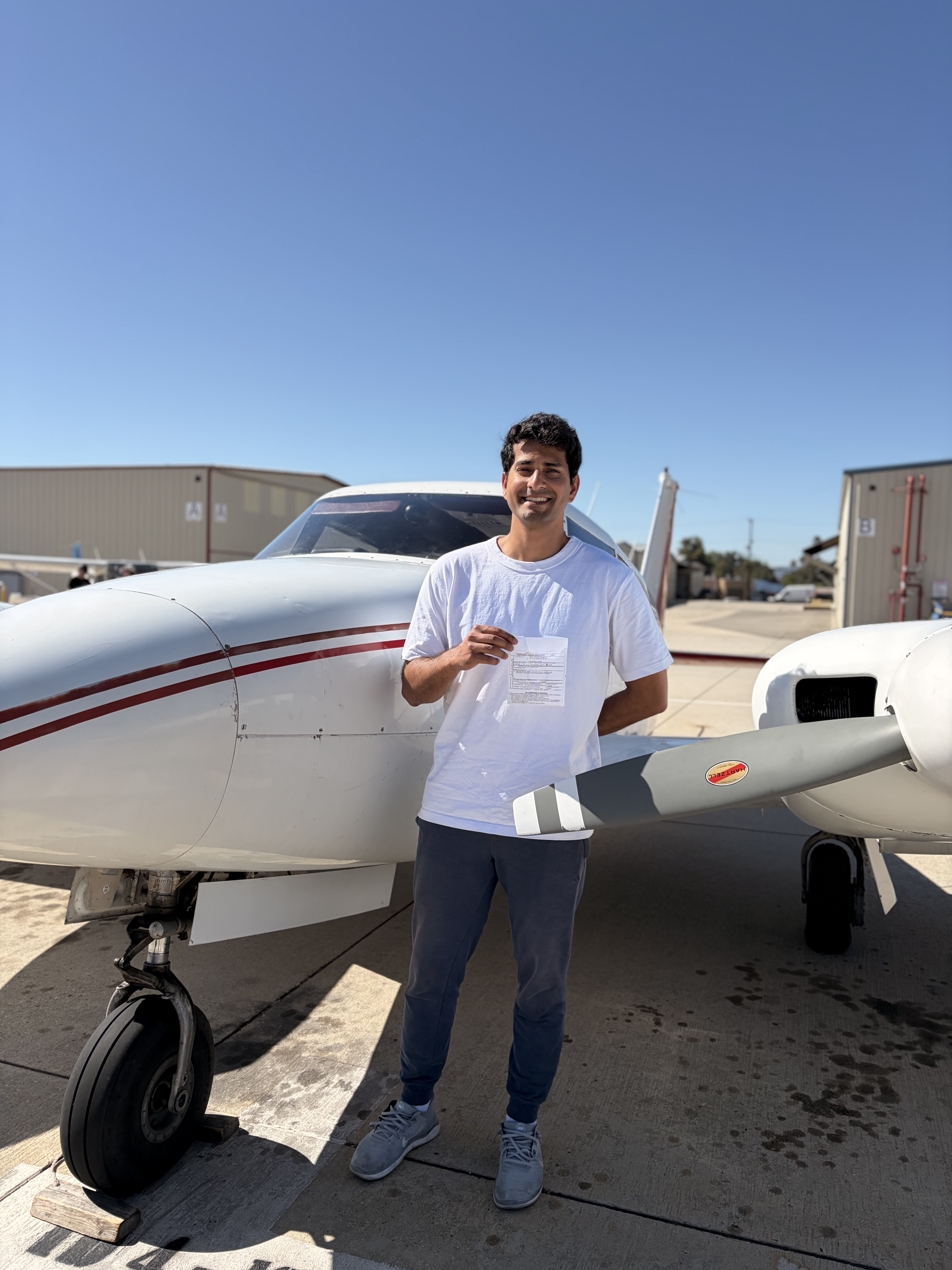
The Oral Exam: Where the Examiner Learns How You Think
The oral portion is a conversation. The examiner asks questions about the airplane, its systems, its performance, and how you make decisions. It is not meant to be a trap. It is meant to show whether you understand what you are about to do in the air.
Expect topics drawn from your 8 hours of ground school: aircraft systems, single-engine aerodynamics, and weight and balance. Fuel, electrical, propellers, landing gear, and engine controls are all fair game, and so is how the airplane behaves with one engine out.
A strong oral comes from explaining your answers out loud. Practice with your instructor and, if you can, with a friend. Saying “here is what happens and here is what I do” in plain words shows the examiner a pilot who understands the airplane.
If you do not know an answer, say so and show how you would find it. Knowing where to look is a skill too.
The Flight: Maneuvers You Will Be Asked to Show
After the oral, you and the examiner fly the Twin Comanche. You will do normal operations first, and then the maneuvers that define a multi-engine rating:
- Engine-inoperative procedures: identify a failed engine, verify it, and feather the propeller using the checklist.
- Vmc demonstrations: show how minimum control speed works when one engine is out, and how to recover directional control.
- Single-engine approach and landing: fly a pattern at Van Nuys and land with only one engine producing power.
- Maneuvering under asymmetric power: keep the airplane under control when thrust is unequal.
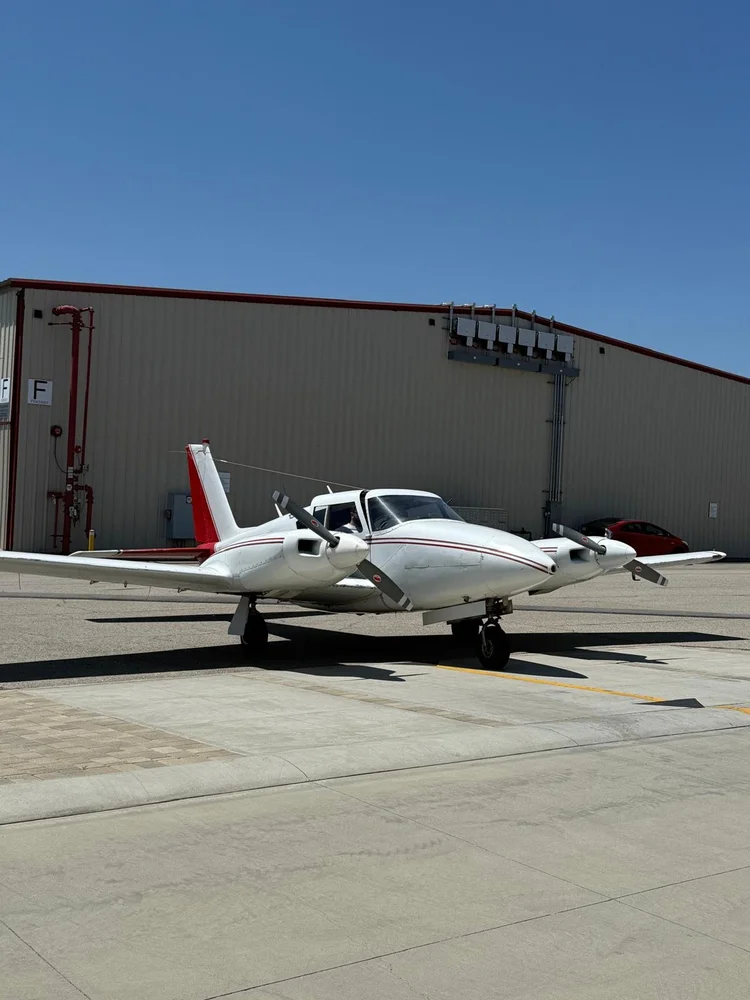
You will be flying a 1965 Piper PA-30 Twin Comanche, N7738Y, the same airplane you trained in. It has a Garmin GNX 375, a Garmin 345 audio panel, and a GI-106A VOR indicator, and it rents for $320 an hour. You can see it on our Twin Comanche page.
Using the airplane you trained in removes one variable. You know where each control sits, how the engines sound, and how it handles in the pattern, which lets you focus on the maneuvers.
What Examiners Tend to Look For
Every examiner has a style, but the standards are the same, and they reward the same habits. Think about what you are showing:
- Procedure before action. You identify, verify, and then act, in that order.
- Airplane control first. You fly the airplane even while you are running a checklist.
- Clear communication. You tell the examiner what you are doing and why.
- Good decisions. You make safe calls and speak up when something does not feel right.
None of this requires perfection. It requires the habits you have been building since the first day of your course.
How We Prepare You So Test Day Feels Familiar
Preparation is built into the course. The 5 hours of online videos and the ground school give you the knowledge. The 8 hours of dual flight instruction gives you the maneuvers. Together with the 9.5 hours of aircraft rental, those figures are the program’s structure, and your instructor will tell you when you are ready as you go.
We also give active students free access to our X-Plane simulator. Running engine-out flows in the simulator builds the habit you want when the real maneuver arrives. Details are on our simulator training page.
If you want a fuller look at how the days fit together before the final one, our guide to the stages of the 8-day course shows where the checkride sits. For a step-by-step look at getting ready, see our preparation checklist.
Three Questions to Ask Your Instructor Before the Test
A final conversation with your instructor can settle most of the loose ends. Bring these three questions:
- Which topics should I review once more? Your instructor has watched you through the whole course and knows where you are strongest.
- Which maneuver do you want me to rehearse again? One more engine-out flow in the simulator can steady your nerves.
- Am I ready for the practical test? Your instructor recommends you when you meet the requirements and are prepared, and an honest yes is the signal you are waiting for.
Use that conversation to set your plan for the final days. It is a short talk, and it shapes everything that follows.
A Simple Plan for the Night Before and the Morning Of
The best test-day plan is a quiet one. The night before, review your notes, pack your documents, and go to bed on time. A rested pilot thinks more clearly, and clear thinking is most of the test.
On the morning of the checkride, eat something, arrive early, and walk through the airplane’s preflight with your instructor if time allows. Breathe through the oral, take your time on the flight, and treat each maneuver as one you have done before, because you have.
If something goes wrong, stay calm. Examiners know that pilots are human, and a calm recovery shows the exact skills the rating is meant to teach.
What Happens After You Pass
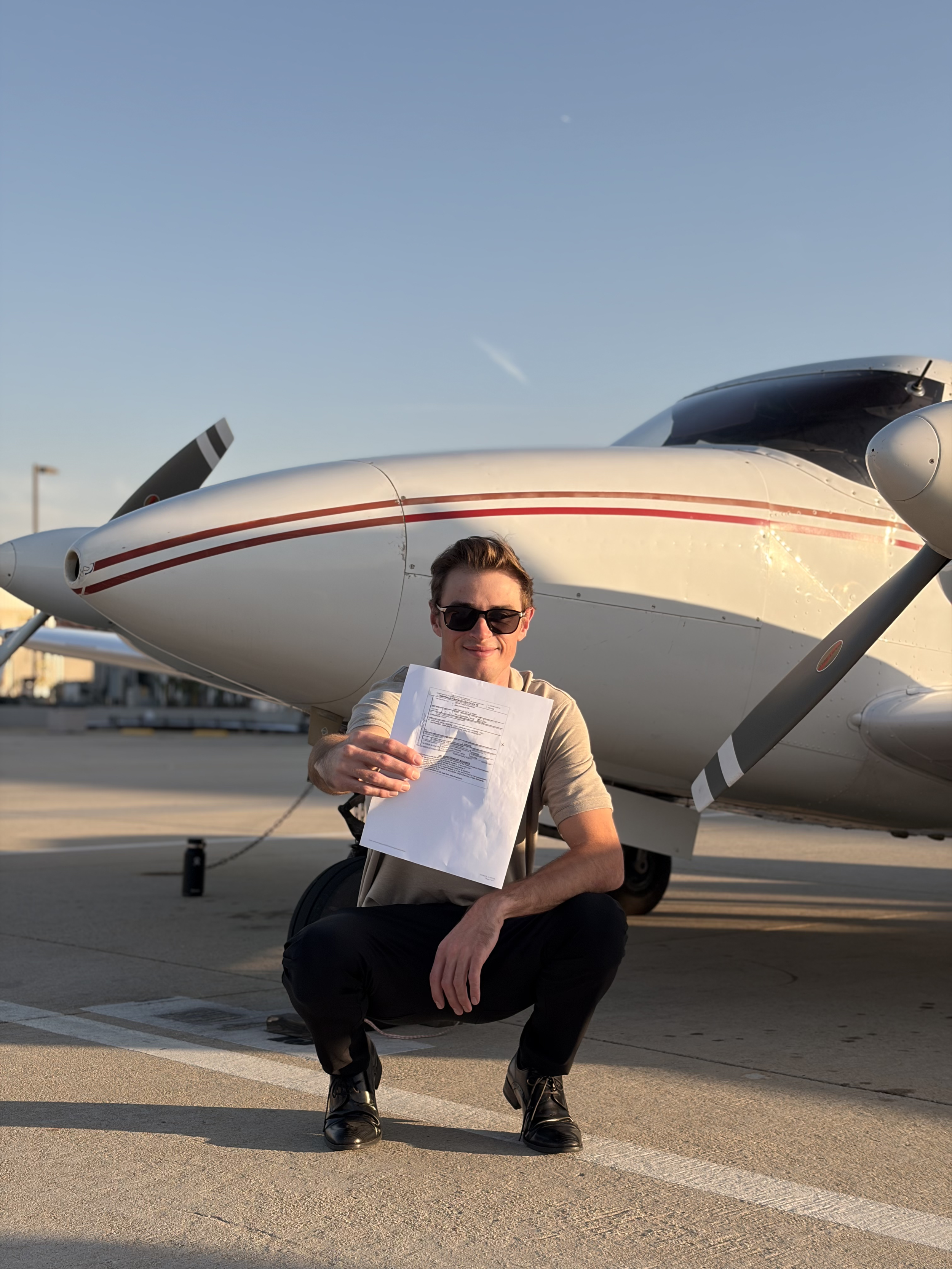
When you pass, you receive a temporary certificate from the examiner with your new multi-engine class rating added to your pilot certificate. You can then fly multi-engine airplanes within the privileges of your certificate.
For many pilots, the rating opens the door to charter, cargo, and airline roles that involve multi-engine aircraft. If you are building toward that kind of career, our Zero-1500 program covers the longer route.
Paying for the Course Behind the Checkride
We bill pay as you go, so you cover the instruction and aircraft time you use after each lesson, and there is no large deposit required to start. The program investment runs $4,440 to $4,850, and our cost breakdown explains each line.
If you would like to finance it, our financing partners include Stratus Financial, AOPA Financing, and Columbia Bank.
Frequently Asked Questions
What happens on the multi-engine checkride?
You take a practical test with an FAA examiner, with an oral portion and a flight portion. You act as pilot in command and show that you can handle normal operations and engine-out emergencies. See how the course leads up to it in our multi-engine rating program.
Is there a written exam first?
No. There is no FAA written exam for this add-on rating, so the checkride is the final step.
Which maneuvers will I fly?
Expect engine-inoperative procedures, Vmc demonstrations, single-engine approaches and landings, and maneuvering under asymmetric power. Our guide to the stages of the 8-day course shows where each one fits.
Is the checkride flight included in the program?
Yes. The checkride flight portion is included in the 9.5 hours of aircraft rental. The program investment runs $4,440 to $4,850, and our financing partners can help spread it out.
Who decides I am ready for the test?
Your instructor recommends you when you meet the requirements and are prepared. Use our preparation checklist to get there.
What happens after I pass?
You receive a temporary certificate with the multi-engine class rating added to your pilot certificate.
Walk Into Test Day Ready
The checkride is the last step of a course that has been preparing you for it from day one. If you build your habits, practice your flows, and rest before the test, you will walk in as the pilot the examiner expects to meet.
Request information from ActivePILOT to talk through your certificate and your dates. Contact us to confirm current availability for the Twin Comanche and your checkride scheduling.


.B93hxYof_19tRkW.webp)