
3-Day Multi-Engine Rating: Is It Possible, and What Accelerated Really Means in 2026

Published by:
Ari Hovnanyan
Published on:
Updated on:
Read time:
7 min read
Three days sounds wonderful when you have a job offer waiting and a calendar full of other commitments. It is easy to see why “3-day multi-engine rating” is a popular search. It is also fair to ask whether it is realistic, and what a three-day promise leaves out.
Our answer is direct. At ActivePILOT, our multi-engine program is an 8-day accelerated course at Van Nuys Airport (KVNY). We do not run it as a three-day course, and this guide explains why, so you can judge any fast-track claim you come across.
What “Accelerated” Should Mean for a Multi-Engine Rating
An accelerated course is one that removes waiting, not training. You still need to learn how a twin behaves with one engine out, rehearse the emergency procedures until they are automatic, and pass a checkride with an FAA examiner.
A good fast course compresses the calendar by lining everything up in advance: ground work finished early, aircraft and instructor booked back to back, and the examiner scheduled before you arrive. The training itself is the same training, and the checkride standard does not change because the schedule did. A pilot who finishes quickly still has to show the same skills as one who took longer.
That distinction is the most useful tool you have when you compare options. When a course promises a very short timeline, the right question is what got compressed: the waiting around, or the learning.
Add Up What the Rating Actually Involves
Our multi-engine rating program is built from four parts. Put the hours side by side and the shape of the course becomes clear:
| Part | What it covers | Hours |
|---|---|---|
| Ground school | Aircraft systems, single-engine aerodynamics, weight and balance | 8 hours |
| Online videos | Reinforces the fundamentals and critical concepts | 5 hours |
| Dual flight instruction | Normal and emergency multi-engine operations and maneuvers | 8 hours |
| Aircraft rental | Time in the airplane, with the checkride flight portion included | 9.5 hours |
Before the checkride, that is more than 20 hours of ground, video, and instructor-led time, plus flight time in the airplane. These figures are the program’s structure, and an individual student may need more or less depending on proficiency.
Spread those hours across three days and you have a schedule that leaves almost no room to absorb what you are learning. Spread them across eight and you can rest, review, and fly with a clear head.
Why Rushing the Twin Is a Bad Trade
A multi-engine rating exists to teach one skill above all others: handling an engine failure. When one engine stops, the thrust becomes uneven, and the airplane wants to yaw and roll toward the dead side. Your job is to identify the failure, confirm it, secure the engine, and fly the airplane with its remaining power.
That sequence is learned by repetition. You do the checklist on the ground, you rehearse it in a simulator, and you practice it in the airplane at a safe altitude. A good session ends with you doing the steps in the right order without hunting for the next one. That kind of fluency takes time to settle in, and sleep is part of how it settles.
Fatigue works against that kind of learning. A student who has been briefing and flying for ten hours straight makes slower decisions than a student who slept. We would rather give you a realistic calendar than a headline number that wears you down on the way to the checkride.
Why Eight Days Is the Honest Plan
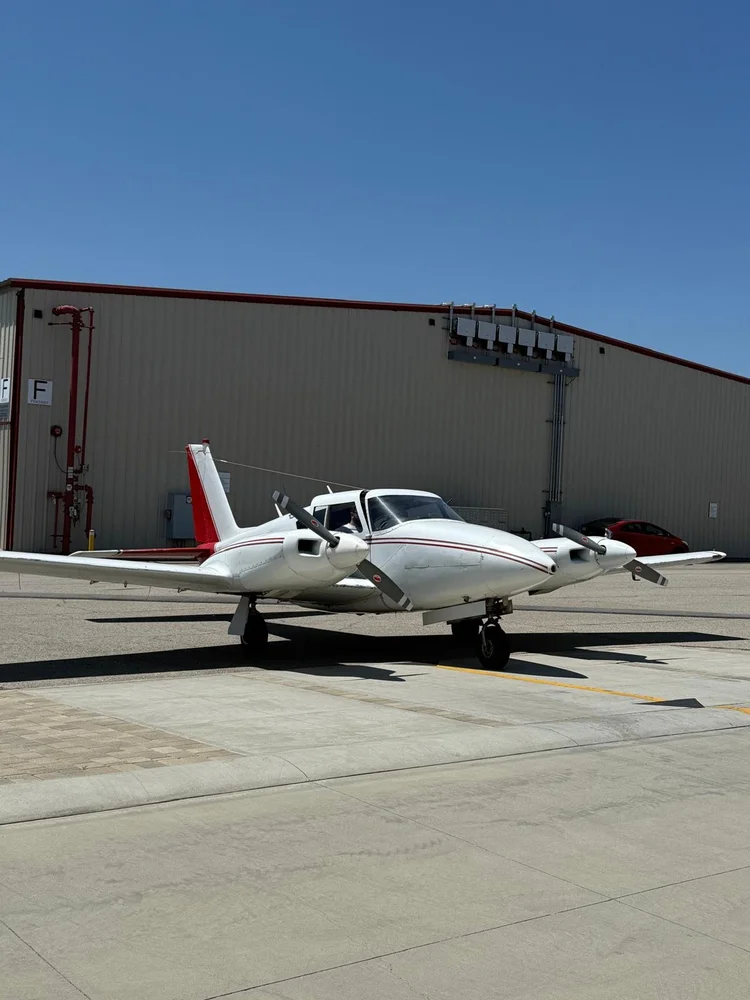
Eight days gives the four parts room to fit together. Ground school and videos sit in front of the flying, so your time in the Twin Comanche goes to maneuvers. Flight sessions are sized to what you can absorb. The checkride sits at the end, with a little margin in case weather or a re-brief requires it.
That margin is practical at Van Nuys. Southern California weather is generally friendly, but a busy towered airport has its own pace, and a plan with some give in it handles delays gracefully.
Eight days also keeps the course the right size for most working pilots. You can take a week away from work, finish the rating, and return with a new privilege on your certificate. Our guide to the stages of the 8-day course shows how each stage fits.
A Quick Look at What a Fast Schedule Costs You
Time pressure has a price that does not show up on an invoice, and it is paid in confidence rather than dollars. A student who rushes through ground school arrives at the airplane with questions still open, and those questions turn into extra briefing time or extra flight time. A student who rushes the flying leaves less room to repeat a maneuver that did not go well the first time.
In a well-built eight-day plan, there is room for review, for repeating a maneuver, and for rest before the checkride. That structure is what keeps the experience calm, and calm is what you want when an examiner is watching you feather a propeller.
How to Judge Any Fast-Track Multi-Engine Course
Whatever school you are considering, a few questions sort real value from a catchy headline:
- How many flight hours are included? The number should line up with the training you need to feel safe in the airplane.
- Is the checkride flight included in the price? Some quotes leave it out, which changes the real total.
- Is ground work part of the course or assumed done? Prep can be real time you have to find.
- What is the plan if weather or a re-brief gets in the way? A fixed schedule with no margin is a risk.
- What aircraft will you fly, and at what rate? The hourly rate drives your total more than almost anything else.
Our Twin Comanche, N7738Y, rents for $320 an hour, and the 8-day program investment runs $4,440 to $4,850. You can see how those numbers add up in our multi-engine rating cost breakdown.
What You Can Do to Finish Faster Without Skipping Anything
You cannot shrink the training, but you can shrink the time you spend waiting. A few habits make a real difference:
- Hold at least a private pilot certificate. It is required to start, along with the endorsements from an authorized instructor before the checkride.
- Finish the 5 hours of online videos before day one. You can work through them on your own schedule.
- Use the simulator. Active students get free access to our X-Plane simulator, which is a low-cost place to run checklists. Details are on our simulator training page.
- Skip the written exam worry. There is no FAA written exam for this add-on rating, so your prep time goes to flying and briefing.
- Plan the checkride date early. Tell us your open dates so we can build the course around them.
If you are also thinking about the airline path, the rating is one step on a longer route, and our Zero-1500 program covers that whole route. It is worth looking at the full picture before you decide how fast to move.
Paying for the Rating Without Large Upfront Deposits
We bill pay as you go, so you pay for the instruction and aircraft time you use after each lesson. There is no large deposit required to start.
If you would rather finance the cost, our financing options include Stratus Financial, AOPA Financing, and Columbia Bank. Spreading the cost out can make the difference between waiting for the right month and starting this one.
Frequently Asked Questions
Does ActivePILOT offer a 3-day multi-engine rating?
No. Our program is planned for 8 days, because the rating still needs ground work, flight training, and a checkride with an FAA examiner. Each part is laid out in our multi-engine rating program.
How many hours does the course include?
The program includes 8 hours of ground school, 5 hours of online videos, 8 hours of dual flight instruction, and 9.5 hours of aircraft rental, with the checkride flight portion included. These are the program’s structure, and your total can shift with proficiency.
Can I finish faster by preparing ahead?
You cannot shrink the training, but you can shrink the waiting. Finish the online videos before day one and run your checklists on our free simulator. Our preparation checklist walks through it.
Is the checkride included in the program?
The checkride flight portion is included in the aircraft rental hours. Our guide to the multi-engine checkride explains what happens on test day.
What does the rating cost?
The program investment runs $4,440 to $4,850, and you can pay as you go or use our financing options. See the cost breakdown for details.
Talk Through the Calendar With Our Team
A three-day headline is easy to remember. A plan you can actually finish is better. If you tell us where you are in your flying, what you need the rating for, and when you can be here, we will map out the eight days with you.
Request information from ActivePILOT to get started. Contact us to confirm current availability for the Twin Comanche and your preferred start dates.


.B93hxYof_19tRkW.webp)