
Multi-Engine Rating Cost in Los Angeles: 2026 Pricing Breakdown

Published by:
Ari Hovnanyan
Published on:
Updated on:
Read time:
9 min read
You already know the multi-engine rating is coming. It sits between your commercial certificate and the twin-engine or turbine jobs you actually want, and unlike your private or instrument training, there is no 40-hour or 250-hour FAA minimum to anchor your budget against. So when you start pricing it out, the quotes swing wildly from one school to the next, and it is hard to tell whether you are comparing real numbers or marketing hooks.
Multi-engine rating cost in Los Angeles comes down to four line items: the aircraft you train in, the instructor and ground time behind the price, the checkride and examiner fee, and how your school structures the pacing. Once you can see those four pieces separately, a $4,500 quote and a $6,500 quote stop looking random and start looking like two different sets of assumptions.
This guide breaks down what drives 2026 rates for a multi-engine add-on, shows what that pricing looks like inside a real accelerated program, and gives you a way to compare quotes that goes deeper than the headline number. If you want the flight-by-flight training walkthrough instead, our multi-engine add-on guide covers the curriculum in detail.
The Real Cost Drivers Behind a Multi-Engine Rating
Before you compare a single quote, it helps to know what you are actually paying for. Multi-engine pricing is built from a handful of components, and schools bundle them differently:
- Aircraft rental — billed by the hour for the twin you train in, usually the single biggest line item.
- Instructor time — dual flight instruction plus ground briefings on engine-out procedures and systems.
- Ground school and study time — briefings, online modules, and simulator prep before you ever start the engines.
- Checkride costs — the flight and aircraft time for the practical test, plus a separate fee paid directly to your Designated Pilot Examiner (DPE).
- Pacing structure — a bundled, accelerated course versus open-ended hourly billing with no defined finish line.
| Cost Driver | What Sets the Price | Why It Moves Your Total |
|---|---|---|
| Aircraft rental rate | Twin model, age, and avionics | The largest swing between schools by far |
| Instructor and ground time | Hours of dual instruction and briefings included | Determines how much of the price is “flying” vs. “learning” |
| Checkride and examiner fee | DPE rate, aircraft time for the test | Often the most overlooked line item in a quote |
| Pacing (accelerated vs. self-paced) | Bundled course vs. hourly billing | Changes both your total cost and your time-to-certificate |
The Multi-Engine Add-On at ActivePILOT bundles all four of these into one structured program, which is why we can hand you a real number instead of a range that depends on how the wind blows. We’ll walk through each driver below.
Your Aircraft Choice Sets the Floor on Price
Nothing moves your total faster than the airplane itself. Twin trainers cost more to operate than single-engine aircraft because you are paying for two engines, two fuel systems, and more maintenance overhead every time you fly.
Other academies in the Los Angeles basin often price twin trainers like the Piper Seminole or Beechcraft Duchess at $400 to $500 or more per hour. On a 10 to 15-hour course, that gap alone can add thousands of dollars before instruction or checkride costs even enter the picture.
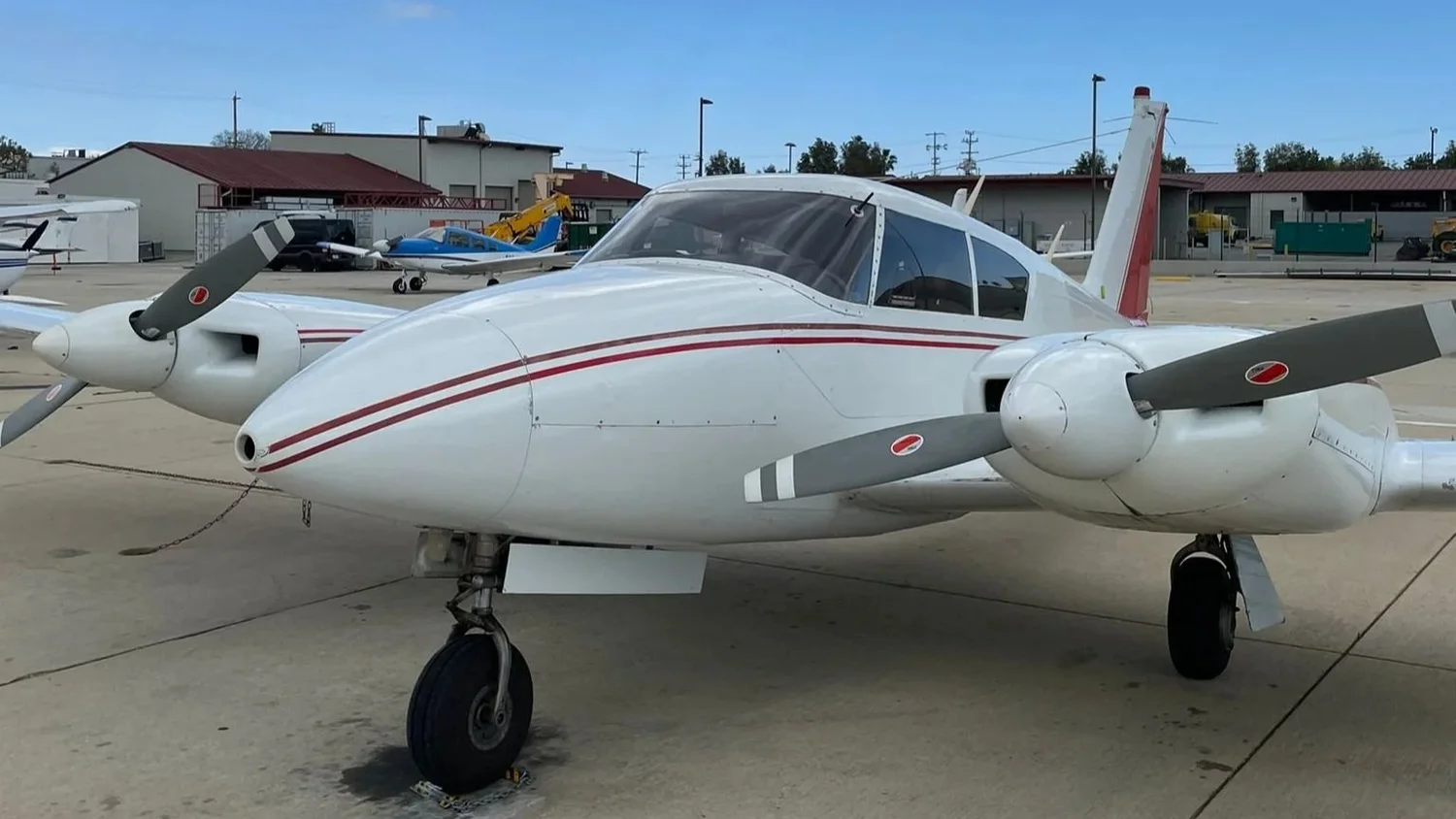
We built our program around N7738Y, a Piper PA-30 Twin Comanche, at $320 per hour — a meaningfully lower rate than the heavier trainers other schools rely on, without giving up authentic systems management. You still fly retractable gear, constant-speed propellers, and real asymmetric-thrust procedures; you just pay less to do it. You can compare that rate against our full lineup on the aircraft rental page to see how it fits your overall training budget.
Instructor Time, Ground School, and the Simulator: Where the Hours Go
Aircraft rental gets the attention, but instructor and ground time is the part of the price that actually teaches you to fly on one engine. Our program includes 8 hours of ground school covering aircraft systems, single-engine aerodynamics, and weight and balance, plus 5 hours of online video instruction to reinforce the concepts before you strap in.
Flight training itself is 8 hours of dual instruction paired with 9.5 hours of aircraft rental, which includes the checkride flight portion. That distinction matters: dual instruction hours and aircraft rental hours are not the same line item, and a quote that only lists one of them is not giving you the full picture.
To keep billable aircraft hours focused on what actually needs a real airplane, active students get free access to our X-Plane simulator to rehearse engine-out flows, checklists, and Vmc awareness on the ground. Practicing those flows before you’re airborne means your time in the Twin Comanche goes toward polishing maneuvers instead of building basic checklist muscle memory at $320 an hour.
The Checkride Line Item Most Students Forget to Budget
Because you already hold a Private Pilot Certificate or higher, the multi-engine add-on skips a new FAA written exam entirely. Your training goes straight into ground briefings, simulator prep, and flight maneuvers, and it ends with a practical test, the checkride, in front of a Designated Pilot Examiner.
Two costs sit inside that checkride: the aircraft time for the test flight, which our program already folds into the 9.5-hour rental block, and the examiner’s own fee, which is billed separately by the DPE. That second number is easy to miss when you’re only comparing advertised course prices, and it’s worth asking about directly before you commit.
Scheduling matters here too. Long waits for a checkride slot mean paying for extra proficiency flights just to stay sharp until test day. We maintain relationships with three DPEs, which typically brings our students’ checkride scheduling to about a month from readiness to test day, rather than the multi-month waits some students run into elsewhere. Contact us and we’ll walk you through the current examiner fee as part of your quote.
Accelerated vs. Self-Paced: Why Pacing Changes Your Total Cost
You’ll see some schools advertise very short, compressed timelines for accelerated multi-engine training. What matters more than the number of days on the ad is what’s actually included in the price and how many total flight and instruction hours back it up. A short calendar window built on the same hour requirements as everyone else is a scheduling choice, not a discount.
Self-paced, hourly billing has its own risk: with no bundled structure, every scheduling gap, weather delay, or extra practice flight adds to your bill piecemeal, and there’s no defined finish line to plan around.
Our 8-day accelerated Multi-Engine Add-On takes the opposite approach. Ground school, online instruction, dual flight time, and the checkride are bundled into one structured week-and-a-half, so you know the hour count and the price before your first flight. That structure is also why we can quote a real range instead of “it depends” — a phrase that should make you ask more questions, not fewer, when you hear it from a flight school.
ActivePILOT’s Multi-Engine Add-On: The 2026 Investment Breakdown
Put the drivers together and here’s what the Multi-Engine Add-On actually costs at ActivePILOT for 2026: an $4,440 to $4,850 investment across the full 8-day program, covering ground school, online instruction, dual flight time, aircraft rental in the Twin Comanche, and the checkride flight portion.
We run on a pay-as-you-go model, so you are not handing over a large deposit before you’ve flown a single hour — you pay for the instruction and aircraft time you actually use as you go through the program. If you’d rather spread the investment out, we work with financing partners including Stratus Financial, AOPA Financing, and Columbia Bank to help fit multi-engine training into your budget alongside the rest of your certificates and ratings. For a wider look at how this rating fits into total training cost across every certificate, our pilot training cost and pricing page breaks down the full path.
Multi-Engine Rating vs. Multi-Engine Instructor: Don’t Budget for the Wrong Thing
If you searched for “multi engine instructor rating” alongside cost terms, it’s worth pausing here. A multi-engine rating is a class rating added to your existing pilot certificate — it lets you act as pilot in command of a twin. A Multi-Engine Instructor (MEI) is a separate flight instructor authorization that lets you teach other pilots in multi-engine aircraft, and it’s priced and trained differently.
Most pilots earn the multi-engine add-on first, then pursue the MEI later as part of building instructor credentials. If your goal is teaching, not just flying, twins, our Certified Flight Instructor program is the right place to plan that cost out separately rather than folding it into your multi-engine budget.
Frequently Asked Questions
-
How much does a multi-engine rating cost in Los Angeles?
At ActivePILOT, the Multi-Engine Add-On is structured around a $4,440 to $4,850 investment for the full 8-day accelerated program, including ground school, dual instruction, aircraft rental, and the checkride flight portion. The examiner’s fee is billed separately by the DPE.
-
What’s included in that 2026 pricing range?
The range covers 8 hours of ground school, 5 hours of online video instruction, 8 hours of dual flight instruction, and 9.5 hours of aircraft rental in the Piper Twin Comanche, with the checkride flight built into the rental hours.
-
Is a shorter accelerated course actually cheaper?
Not necessarily. A compressed timeline changes how quickly you finish, not automatically how much you pay. Compare the total hours and what’s bundled into the price, not just the number of days advertised.
-
Do I need to take a written exam for the multi-engine add-on?
No. Because you already hold a pilot certificate, adding the multi-engine class rating does not require a new FAA knowledge test. Your training time goes directly into ground briefings, simulator prep, and flight maneuvers.
-
Can I finance my multi-engine rating?
Yes. ActivePILOT runs on a pay-as-you-go model with no large upfront deposit, and we also work with financing partners like Stratus Financial, AOPA Financing, and Columbia Bank if you’d rather spread the cost out.
-
What’s the difference between a multi-engine rating and an MEI?
A multi-engine rating lets you act as pilot in command of a twin. A Multi-Engine Instructor (MEI) is a separate instructor authorization for teaching in multi-engine aircraft, and it’s a distinct training path and cost on top of the rating itself.
-
Where can I train for a multi-engine rating near Los Angeles?
ActivePILOT trains out of Van Nuys Airport (KVNY), one of the busiest general aviation airports in the country, using our Piper Twin Comanche for the full 8-day accelerated program.
Get a Real Multi-Engine Rating Cost Number for Your Timeline
A quote is only useful once you know what’s inside it. Now that you can see the aircraft rate, the instruction and ground time, the checkride and examiner fee, and the pacing that shapes every multi-engine price you’ll come across, you’re in a much better position to compare schools on more than a headline number.
If you’re ready to see exactly how the $4,440 to $4,850 investment applies to your certificates, ratings, and schedule, request information from ActivePILOT and we’ll build a real, current quote around your timeline.


