
Flight Simulator Training in Los Angeles: 2026 Guide

Published by:
Ari Hovnanyan
Published on:
Updated on:
Read time:
9 min read
You climb into the simulator seat before your instructor even preflights the airplane. The screen lights up with a runway you already know, and for the next hour you get to make the same mistake five times in a row without burning a drop of avgas. That is the real value of flight simulator training in Los Angeles: the repetition you cannot afford in a rented airplane.
If you are searching for a flight simulator training center near Van Nuys, you are probably trying to solve one of two problems. You want to sharpen your instrument scan before your next lesson, or you want to stop paying aircraft rental rates to relearn a flow you already understand. ActivePILOT’s free X-Plane simulator access is built to solve both, and this guide walks through how simulator time fits our 2026 training standards, who benefits most, and what a session actually looks like.
Why A Simulator Session Beats Chair-Flying At Home
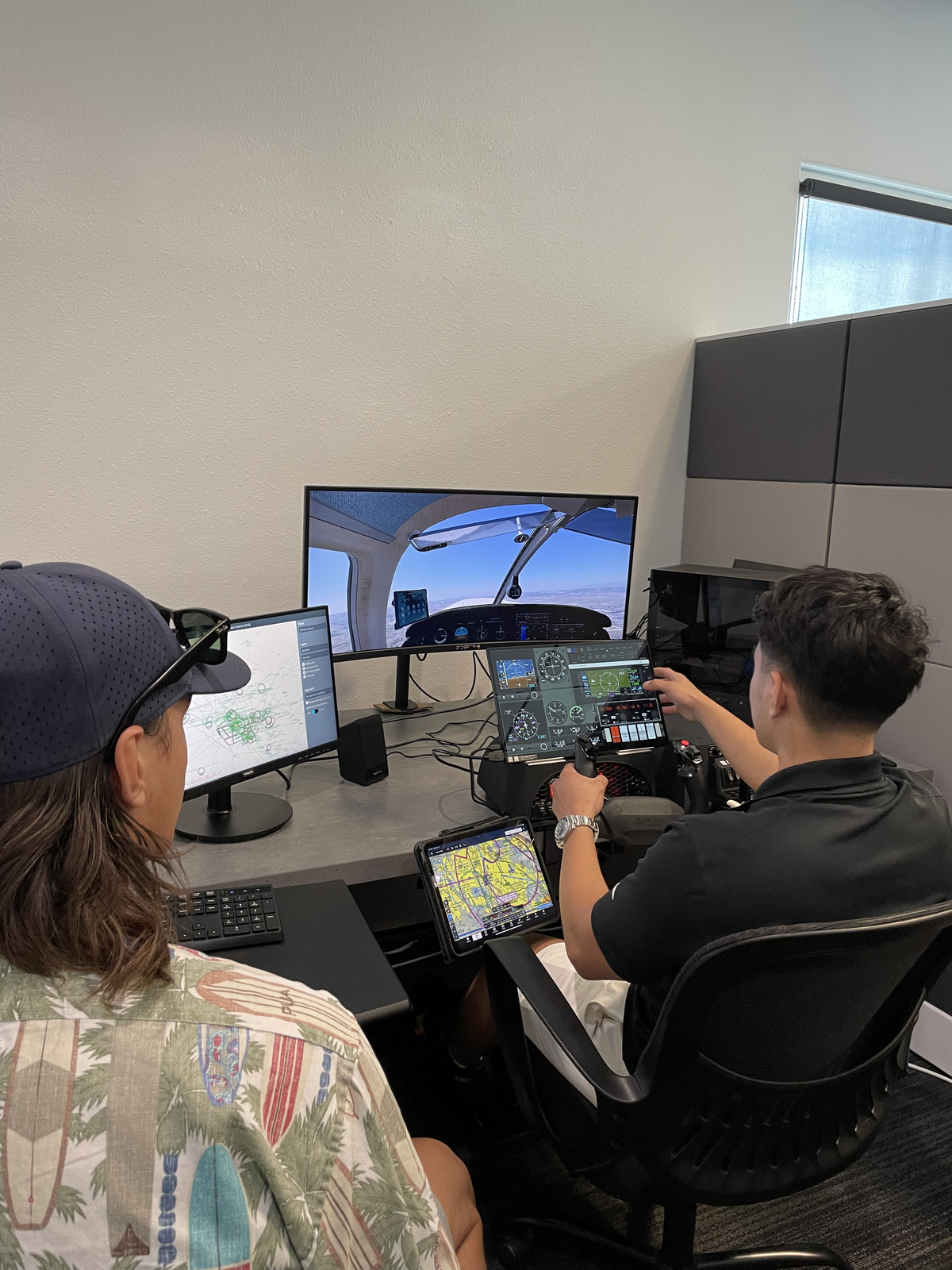
A flight simulator session is not a substitute for time in the airplane. At ActivePILOT, our X-Plane simulator is a basic, non-FAA-approved training device with PilotEdge capability, so it is not a replacement for required aircraft training or FAA-credit flight time. What it is very good at is repetition, and that is a different thing than sitting at home running procedures in your head.
In the airplane, you get a handful of approaches, holds, or maneuvers per hour because of repositioning, traffic sequencing, and fuel. In the simulator, you can reset a botched approach the moment it goes wrong and fly it again immediately. That endless repetition is what sharpens your instrument scan and builds the kind of muscle memory that holds up once the workload in the real cockpit gets heavy.
Because the simulator strips away much of the real-world workload, like ATC congestion, turbulence, and passengers, you can focus purely on your scan, your checklist flow, and your instrument cross-check. Once that becomes automatic on the ground, it holds up far better once you are actually flying.
Who Benefits Most From Simulator Time At ActivePILOT
Simulator practice is not only for instrument students, even though that is where it helps the most. If you are training toward any of the programs below, the simulator gives you a low-cost way to rehearse the exact flows you will need in the airplane.
| Program | How Simulator Time Helps | Why It Matters For You |
|---|---|---|
| Private Pilot program | Rehearse checklist flow, radio calls, and basic instrument reference before solo and cross-country stages | You show up to lessons with cleaner habits instead of building them from scratch in the airplane |
| Instrument Rating program | Rehearse clearance copying, approach setup, holding entries, and Garmin workflow through PilotEdge | Your scan and cockpit flow are already warmed up before the aircraft engine even starts |
| Certified Flight Instructor program | Practice teaching cadence and cockpit management from the instructor seat during dual simulator sessions | You build instructor timing and communication before adding a real student to the workload |
Wherever you are in training, the pattern holds: the simulator is where you make your mistakes cheaply, before they cost you aircraft rental time.
How Simulator Practice Controls Your Training Cost And Timeline
Flight training cost is mostly a function of how many aircraft hours it takes you to reach proficiency. If you are relearning a flow every time you strap into the airplane, that adds hours, and hours add cost.
Active students get free access to ActivePILOT’s X-Plane simulator, so the repetition that would normally cost aircraft rental instead costs nothing. If you want dual instruction with a CFI inside the simulator, that runs $90 per hour, well below aircraft rental rates.
Our Instrument Rating program is priced at $16,078 to $17,350 for a 50-hour training block, and the students who move through it efficiently are usually the ones who show up to each lesson already comfortable with the flow instead of meeting it for the first time in the airplane. That is one reason simulator repetition is part of our 2026 training standards across multiple programs, not just an optional extra.
If spreading that investment out fits your budget better, our financing partners, including Stratus Financial, AOPA Financing, and Columbia Bank, can help you structure payments instead of covering the full cost upfront. We also operate on a pay-as-you-go basis, so you are not required to put down a large deposit before you know your training rhythm.
Instrument Students Get The Most From Structured Simulator Repetition
If you fly VFR in Los Angeles, you already know how quickly a marine layer or a low overcast deck can turn a planned flight into a no-go decision. That is exactly why flight simulator instrument training pays off long before your checkride.
Our instrument rating guide walks through the full training path, but the short version is this: the simulator lets you rehearse clearance copying, approach briefings, missed-approach flows, and Garmin setup as many times as you need, without paying for aircraft time to do it. A CFI can also fail an instrument mid-scenario during a dual simulator session to force partial-panel discipline, something that is far harder and more expensive to safely practice in the actual airplane.
That structure carries forward past the rating itself. If your training plan includes CFII privileges later, the scan and workload-management habits you build now in the simulator are the same habits you will eventually teach.
What To Expect From A Simulator Session At Van Nuys
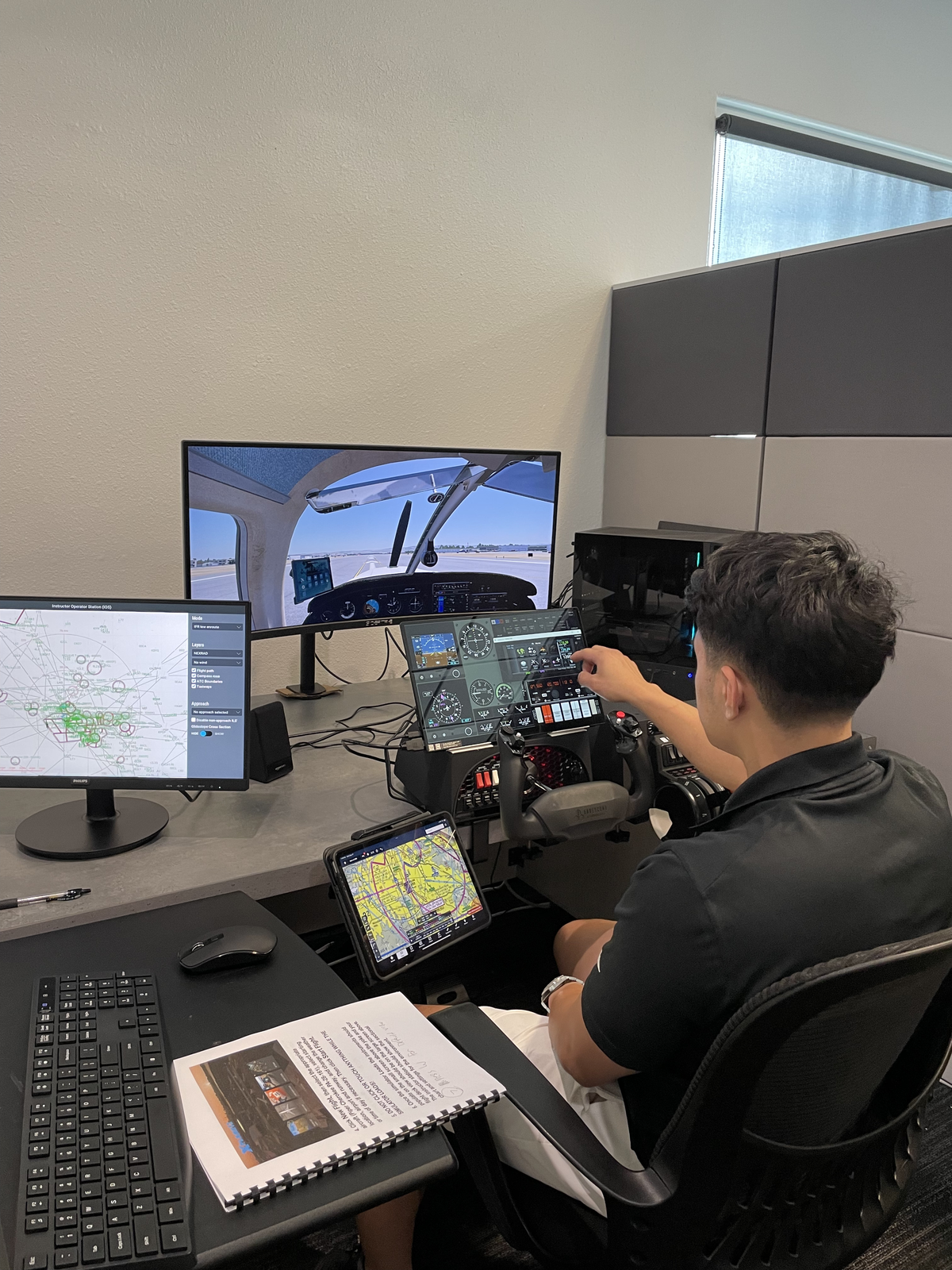
A simulator session is built around whatever you need to rehearse before your next lesson. That might mean flying the same instrument approach five times in a row, working radio calls through PilotEdge until they feel automatic, or having your instructor fail an instrument to sharpen your partial-panel habits.
You can log free simulator time on your own as an active student, or book a session with a CFI for $90 per hour if you want direct coaching on your flow. Either way, our simulator training page outlines what is included, and the goal stays the same: walk into your next aircraft lesson already comfortable with the procedure instead of meeting it for the first time at altitude.
If you are not sure which flows are worth rehearsing first, your instructor is the best person to ask. Bring your logbook, tell them what felt shaky in your last lesson, and build your next simulator session around that specific gap.
FAQ: Flight Simulator Training At ActivePILOT
Is ActivePILOT’s flight simulator free to use?
Yes. Active students get free access to our X-Plane simulator. Dual instruction with a CFI inside the simulator is $90 per hour if you want direct coaching on your flow.
Does simulator time count toward my required flight hours?
No. Our simulator is a basic, non-FAA-approved training device with PilotEdge capability. It is a practice tool, not a substitute for required aircraft training or FAA-credit flight time.
Is flight simulator training only useful for instrument students?
No. Private pilot, instrument, and CFI-track students all use simulator time to rehearse checklist flow, radio work, and specific maneuvers before flying them in the airplane.
How is X-Plane different from a full-motion FAA-approved trainer?
X-Plane is a desktop-style simulation tool with PilotEdge radio capability. It does not replicate motion and does not carry FAA training-device approval, so we treat it strictly as a repetition and procedures tool rather than a credit-bearing device.
Can simulator practice actually lower my total training cost?
It helps you avoid paying aircraft rental rates to relearn a flow from scratch. The airplane hours you save by showing up prepared are where the real savings show up.
Do I need to be enrolled in a specific program to use the simulator?
Free access is available to active ActivePILOT students across our flight training programs. Request information and we will walk through how simulator time fits your specific plan.
Start Your 2026 Simulator Training Plan At Van Nuys
If procedures practice, instrument scan work, or checkride prep is the piece slowing your progress down, the simulator is where you fix that without paying for extra aircraft time. Visit our simulator training page to see what is included for active students, or request information and we will help you build a 2026 training plan that blends simulator repetition, aircraft time, and a clear path to your checkride.


.B93hxYof_19tRkW.webp)