
Instrument Rating Requirements in 2026: Your Checklist Before Day One

Published by:
Ari Hovnanyan
Published on:
Updated on:
Read time:
8 min read
Search for an instrument rating license and you land on a wall of regulation text. The rules are clear once you sort them, but it is easy to miss one line and find out about it a week before your checkride.
This guide turns the FAA’s instrument rating requirements into a checklist you can run against your own logbook. Work through it before your first lesson and you will know exactly what you already have, what you still need, and how to plan the gap. One quick note on wording: the FAA calls it an instrument rating added to your pilot certificate, not a separate license, though most pilots use both terms.
Who Can Start Instrument Rating Training
The eligibility list is short. To add an instrument rating, you must hold at least a current private pilot certificate, or be applying for one at the same time, with an airplane rating. You must also be able to read, speak, write, and understand English.
That is all you need to begin. You do not need every hour logged before your first lesson, because much of the required experience is built during the training itself. Our Instrument Rating program starts right where your private pilot training ended.
If you are still working on your private certificate, our private pilot step-by-step guide shows how to finish it in a way that sets up instrument training well.
The Hour Requirements, Line by Line
The hour requirements are where most students find their gaps. Here is what the FAA requires for an instrument airplane rating.
| Requirement | Minimum | Where you usually log it |
|---|---|---|
| Cross-country time as pilot in command | 50 hours, at least 10 in an airplane | Private training plus solo trips in our rental fleet |
| Actual or simulated instrument time | 40 hours | Instrument Rating training flights |
| Training from an instrument instructor (CFII) | 15 of the 40 hours | Dual lessons with your CFII |
| Recent training before the checkride | 3 hours in an airplane within 2 calendar months | Final phase of training |
| Long IFR cross-country | 250 nm, approach at each airport, three kinds of approaches | Final phase of training |
These numbers are FAA minimums. How long it takes you to reach checkride standard depends on how often you fly, the weather, and how quickly the procedures come together for you. Our program plans for 50 hours of flight time, which gives room above the minimum to build real proficiency.
How to Audit Your Logbook in 15 Minutes
Open your logbook and run three totals. First, add every flight logged as cross-country time as pilot in command. Second, add any simulated instrument time you logged during private training with an instructor. Third, check whether any of that instrument time was in an approved training device, since only certain devices count and the FAA caps how much device time you can credit.
Subtract your cross-country total from 50. That number is the rental time to plan into your budget. A pilot who finished private training with 15 cross-country hours needs 35 more, and those hours can be flown solo at the rental rate. Many students fly them as practice IFR trips, filing and flying routes the way they will on real instrument flights.
Bring those three totals to your first meeting with us. With them in hand, we can show you which requirements are already covered and build the missing hours into your training plan from the first week. Our instrument rating cost breakdown shows how cross-country time affects your total.
The Knowledge Test: What to Do Before You Book It
Before the FAA instrument knowledge test, you need ground training from an authorized instructor or a home-study course, plus an endorsement saying you are ready to take the test. The material covers IFR regulations, the air traffic control system, navigation and approaches, charts, weather, decision making, and crew resource management.
Our program includes 30 hours of classroom ground training and 15 hours of online video lessons, which cover these areas and lead to the endorsement. Many students take the test before the halfway point of flight training, so the final weeks are free for flying.
Weather is the topic that surprises most students. Reading forecasts and reports for IFR planning goes deeper than private pilot weather. The FAA’s free Instrument Flying Handbook is a good companion to your ground lessons. Our FAA ground school guide explains how classroom study fits around your flights.
The Practical Test: What Your Endorsement Means
The last steps are flight training on the required areas of operation, an endorsement for the practical test, and passing the checkride with an examiner. The areas include preflight preparation, air traffic control clearances, flight by reference to instruments, navigation systems, instrument approaches, emergency operations, and postflight procedures. Expect an oral portion on the ground first, where the examiner asks you to plan an IFR flight and explain your decisions, followed by the flight itself. Practicing both parts with your instructor during the mock checkride makes the real day feel familiar.
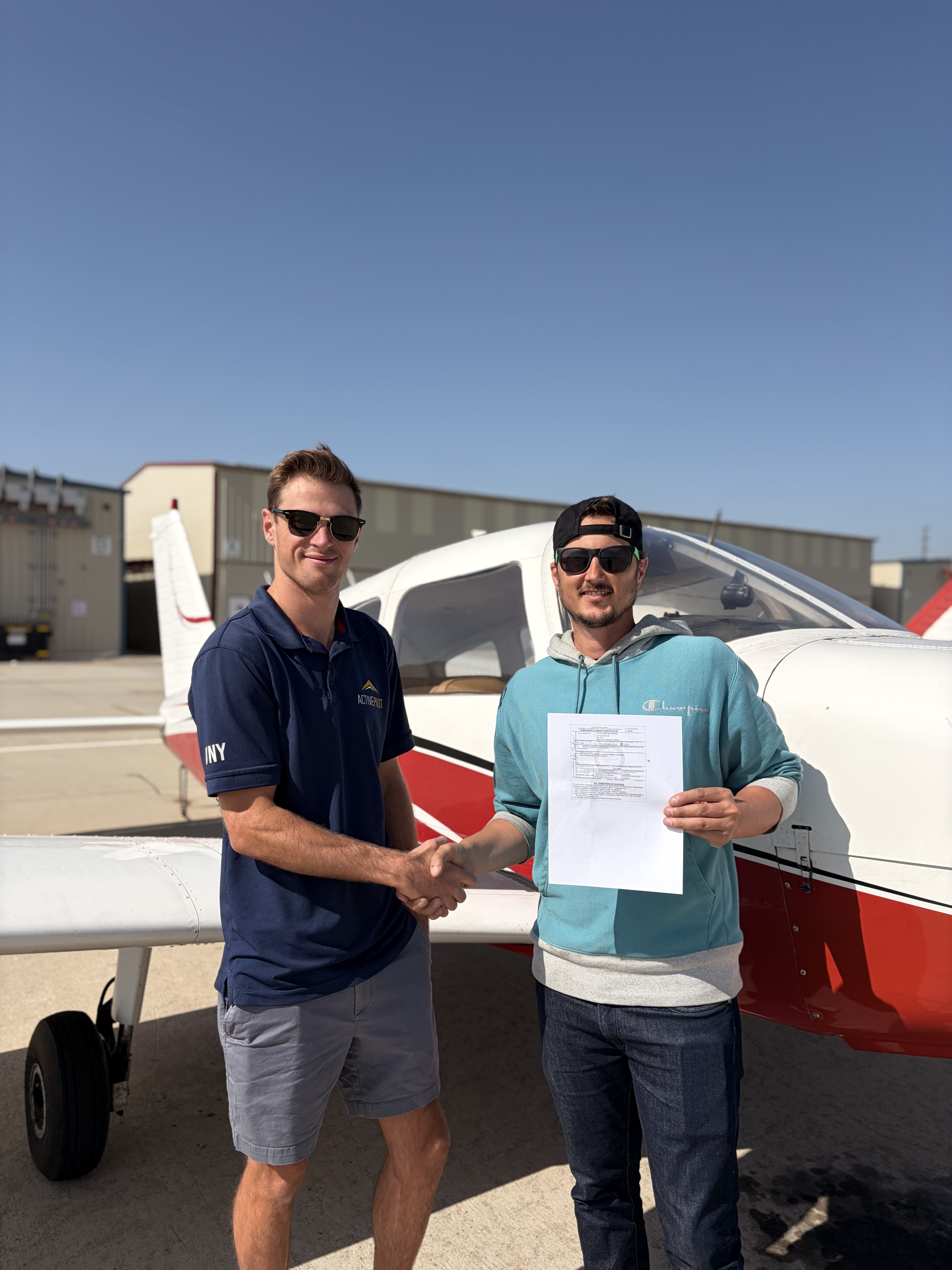
Your endorsement means your instructor has seen you fly every area to the standard. When you get it, we usually schedule checkrides in about a month through our relationships with local designated pilot examiners. Our instrument rating overview describes the skills the examiner looks for.
Requirements That Trip Up Students Late in Training
Two requirements cause most of the last-minute surprises. The first is the 3 hours of instrument training within 2 calendar months before the checkride. If a long break happens near the end of training, that window can close, and you need fresh training before the test.
The second is the long IFR cross-country. It has to cover 250 nautical miles on a filed IFR flight plan, with an approach at each airport and three different kinds of approaches. Plan it early with your instructor, so weather or aircraft scheduling cannot push it into the last week.
A third, smaller one is simulator time. Our free X-Plane simulator is great for practice, but it does not count toward your 40 hours of instrument time. Use it to prepare, and log your required time in the airplane. See how students get the most from practice sessions in our simulator training guide, from briefing plates to rehearsing radio calls.
Paying for the Requirements You Still Need
Once your audit shows the gap, the next question is how to pay for it. ActivePILOT trains on a pay-as-you-go model with no large advance deposit. You pay for the instruction and aircraft time you use after each lesson, which suits students building hours at their own pace.
You can also finance training through Stratus Financial, AOPA Financing, or Columbia Bank. Our financing page explains each option.
Frequently Asked Questions
Is an instrument rating a license?
The FAA calls it a rating added to your pilot certificate, not a separate license. Most pilots search for “instrument rating license,” and both mean the same thing in practice.
What do I need before I start instrument training?
You need at least a current private pilot certificate with an airplane rating and the ability to read, speak, write, and understand English. The hours are built during training. See our Instrument Rating program for the full plan.
How many cross-country hours do I need for an instrument rating?
You need 50 hours of cross-country time as pilot in command, with at least 10 in an airplane. Many students build the difference in our rental fleet.
Does simulator time count toward the 40 instrument hours?
Only time in FAA-approved devices with an instructor counts, and the FAA limits how much you can credit. Our X-Plane simulator is for practice and does not count toward the 40 hours.
Do I need a medical certificate for an instrument rating?
You need to meet the medical requirements for the flying you do as pilot in command, just as you did for your private certificate. Contact us if you have questions about your medical before you start.
Bring Your Logbook and Start With a Clear Plan
The best day to find a missing requirement is before your first lesson. Run the checklist, total your hours, and bring the numbers to us. Request information and our team will review your starting point with you.


