
How Much Does an Instrument Rating Cost in Los Angeles? 2026 Breakdown

Published by:
Ari Hovnanyan
Published on:
Updated on:
Read time:
8 min read
You finished your private pilot checkride, planned a Saturday flight to the coast, and woke up to a gray ceiling sitting over the Valley. That marine layer grounds VFR pilots across Los Angeles for whole mornings at a time, and it is the reason so many new private pilots start asking what an instrument rating costs.
At ActivePILOT, our Instrument Rating program runs $16,078 to $17,350. Most of that money goes to airplane time and instruction, and the spread between the low and high end comes down to how consistently you fly. This guide breaks the number into its parts so you can plan a budget you can trust.
Where Your Instrument Rating Money Actually Goes
Our program is built around 50 hours of flight time in a Piper Warrior, 30 hours of ground training in the classroom, and 15 hours of online video lessons. You also get free practice time on our X-Plane simulator. You can see the full structure on our Instrument Rating program page.
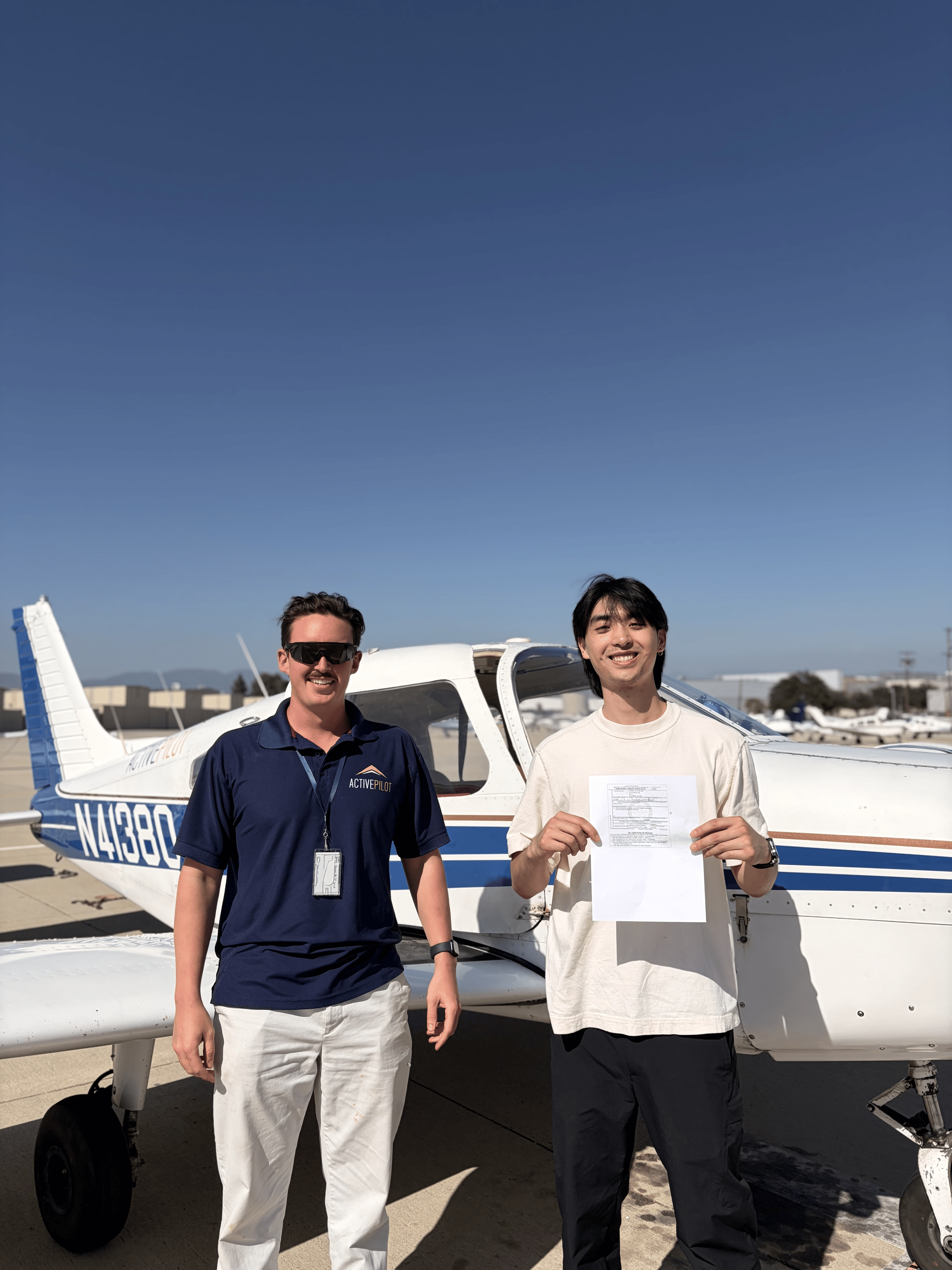
The airplane is the biggest single line. Our glass-equipped Warriors used for instrument work, such as N40057 and N41380, rent for $175 an hour. Fifty hours at that rate comes to $8,750 in aircraft time before any instruction.
The rest of the range covers your instructor’s time in the air and on the ground, the classroom hours, and course materials. An instrument student flies with an instructor for much more of the training than a private pilot student does, because most of the work happens with a view-limiting device and an instructor watching the approach.
| Cost driver | What it covers | How it shows up |
|---|---|---|
| Aircraft time | 50 hours in a Piper Warrior at $175/hr | About $8,750 |
| Flight and ground instruction | Dual flights, briefings, 30 classroom hours | Most of the remaining range |
| Online video lessons | 15 hours of study before and between flights | Included in the Instrument Rating program |
| Simulator practice | X-Plane with PilotEdge radio practice | Free for active students |
What Moves You to the High or Low End of the Range
The biggest swing factor is how often you fly. Instrument skills fade fast. If you fly twice a month, the first part of every lesson goes to rebuilding your scan, and those minutes cost the same as new progress. Students who fly two or three times a week spend less time relearning and more time moving forward.
The second factor is arriving prepared. A student who has watched the video lesson, briefed the approach plate, and run the procedure on the simulator the night before uses the airplane for flying. A student who opens the plate in the run-up area pays airplane rates to read. Our flight simulator training guide shows how students use that free time.
The third factor is your starting point. A pilot who already logged some cross-country time and practiced basic attitude instrument flying during private training starts ahead. A pilot who has not flown for a year usually needs a few flights to get sharp before the instrument syllabus really begins.
The FAA Hours That Set the Floor on Your Budget
Every instrument rating budget sits on top of the FAA’s minimum experience rules. To add an instrument rating to your private pilot certificate, you need 50 hours of cross-country time as pilot in command, with at least 10 of those hours in an airplane. You also need 40 hours of actual or simulated instrument time, and 15 of those hours must come from an instructor with instrument privileges, often called a CFII.
The rules also require a long IFR cross-country of 250 nautical miles on a filed flight plan, with an instrument approach at each airport and three different kinds of approaches. Within the two calendar months before your checkride, you need 3 hours of instrument training in an airplane. The FAA publishes the testing standards for the checkride on its Airman Certification Standards page.
These are minimums, not a schedule. How long you take to reach checkride standard depends on how often you fly, the weather, and how quickly the procedures click for you. Our instrument rating overview explains the skills you build along the way.
How Cross-Country Hours Change Your Total
The 50 hours of cross-country pilot in command time catches a lot of new private pilots off guard. If you finished your private certificate close to the minimums, you may have logged only a handful of cross-country hours. The gap has to be filled before your checkride.
Many students build that time by flying solo trips in our rental fleet, which is billed at the rental rate without an instructor. Flying to a new airport for lunch counts when the trip meets the FAA’s cross-country definition, and the time serves as useful IFR planning practice if you file and fly the route the way you would on an instrument flight plan. Planning these trips early keeps the hour-building from turning into a scramble at the end.
Here is a simple way to check where you stand. Open your logbook and add up every flight marked as cross-country where you were pilot in command. Subtract that number from 50, and you have the hours you still need to plan for. If the answer is 20 hours, that is 20 hours of rental time to add to your budget, flown at your own pace on weekends or between lessons. Bring that number to your first meeting with us, and we can build the trips into your training plan so they also sharpen your navigation and radio work.
How Free Simulator Time Lowers What You Pay in the Airplane
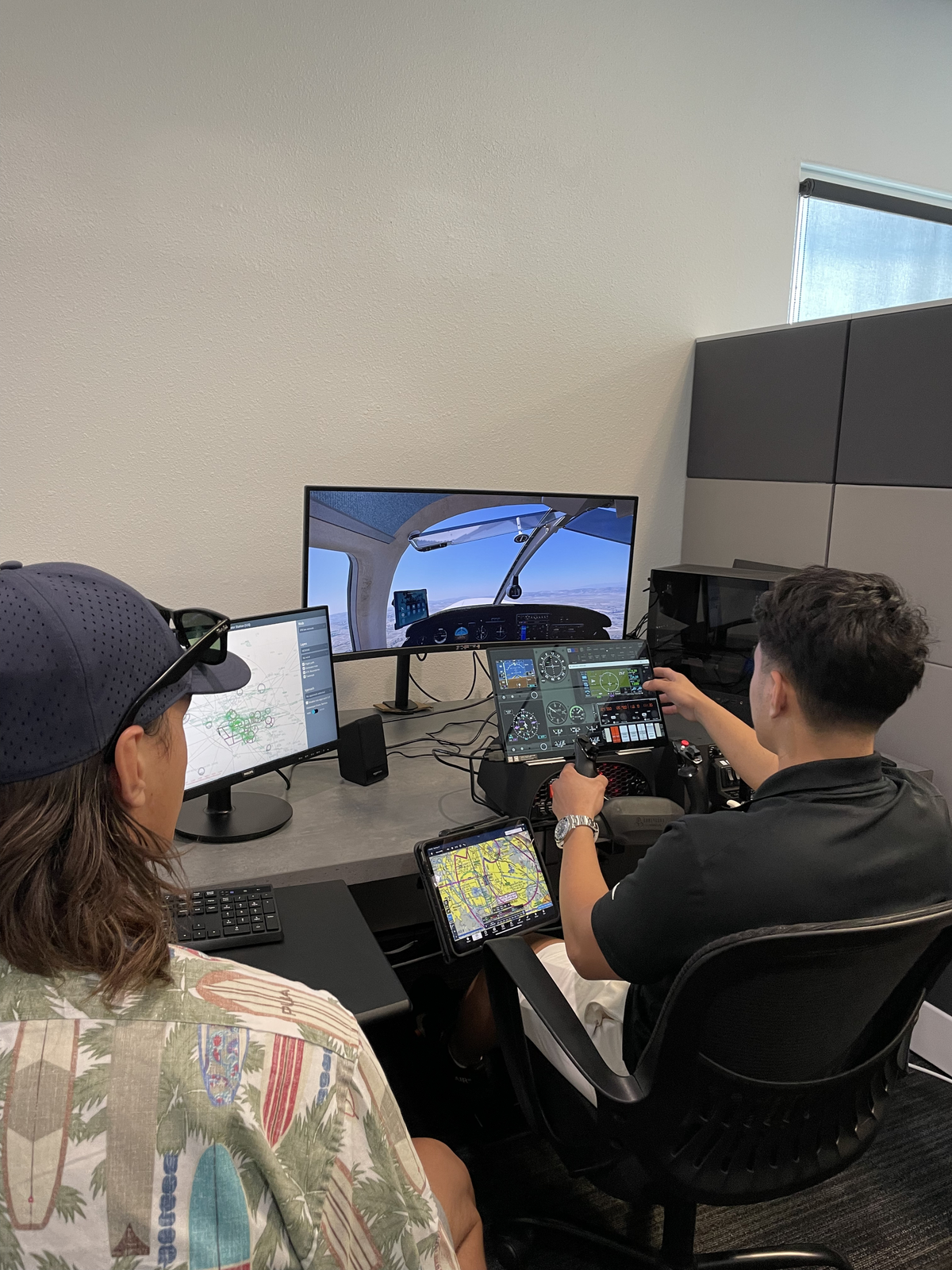
Our X-Plane simulator with PilotEdge lets you practice approaches, holds, and radio calls without paying for an airplane. It does not count toward the FAA’s 40 hours of instrument time, so its value is preparation. You show up to the airplane already knowing where your hands go and what the controller is likely to say next.
That preparation adds up. When a hold entry takes three tries in the sim the night before, it takes one try in the air. Each wasted minute in the airplane costs real money, and each minute in our simulator is free for active students. You can see the setup on our simulator training page.
Paying for Your Instrument Rating Without a Big Deposit
ActivePILOT trains on a pay-as-you-go model. There is no large advance deposit. You keep a card on file and pay for the instruction and aircraft time you actually use after each lesson. That keeps your money in your account until you fly.
If you would rather spread the cost, we work with Stratus Financial, AOPA Financing, and Columbia Bank for flight training loans. Our financing page explains each option and how students combine financing with pay-as-you-go billing.
Frequently Asked Questions
How much does an instrument rating cost in Los Angeles?
Our Instrument Rating program runs $16,078 to $17,350, covering 50 hours of flight time, 30 hours of ground training, and 15 hours of online video lessons. Your final total depends mostly on how often you fly and how prepared you arrive. See the program details for the full structure.
Can simulator time lower the cost of my instrument rating?
Yes, as preparation. Our free X-Plane simulator does not count toward the FAA’s 40 hours of instrument time, but practicing procedures in it means fewer repeated attempts in the airplane, where every minute is billed.
Do I need more cross-country hours before my instrument checkride?
You need 50 hours of cross-country time as pilot in command, with at least 10 in an airplane. Many private pilots have fewer than that, so plan to build the difference in our rental fleet early in training.
How long does it take to earn an instrument rating at ActivePILOT?
Most of our students finish in about 2 to 3 months. Students who fly several times a week tend to finish faster and spend less in total. Our instrument rating overview covers the training path.
Can I finance my instrument rating?
Yes. You can train pay-as-you-go with no large deposit, or finance through Stratus Financial, AOPA Financing, or Columbia Bank. Our financing page explains the options.
Get a Clear Instrument Rating Budget Before You Start
The fastest way to protect your budget is to know your starting hours and plan your schedule before the first lesson. Tell us where your logbook stands and how often you can fly, and we will help you see where your total is likely to land. Request information and our team will walk you through it.


