
FAA Ground School Los Angeles: 2026 Training Guide

Published by:
Ari Hovnanyan
Published on:
Updated on:
Read time:
9 min read
Before a student ever pulls a Piper Warrior out of the hangar, most of the real learning has already started on the ground. Weather theory, airspace rules, weight and balance, radio phraseology, the logic behind an instrument approach: none of that gets figured out mid-flight for the first time. It gets built in ground school.
If you have searched for FAA ground school in Los Angeles, you already know the flying part gets most of the attention. The ground side is where a lot of students either build real confidence or fall behind without realizing it.
At ActivePILOT Flight Academy in Van Nuys, ground training is not an afterthought bolted onto flight lessons. It is a structured part of every program, from your first private pilot lesson through instrument, commercial, and CFI training. This 2026 guide walks through what ground school actually covers, how the in-person and self-study pieces fit together, and how it connects to the flight lessons you are paying for.
Ground School Is Where Your Flight Lessons Start Making Sense
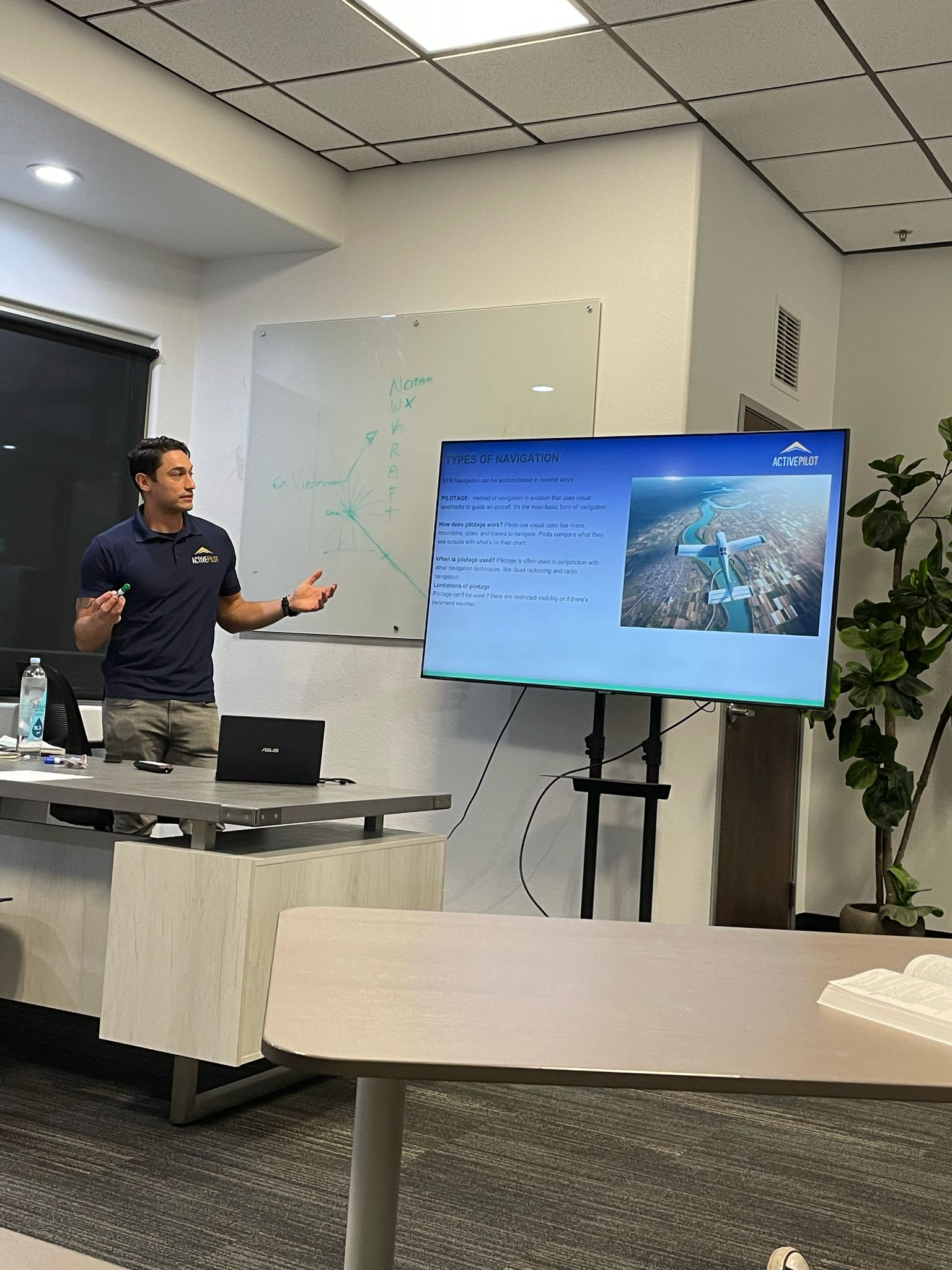
Ground school is the aeronautical knowledge side of your training. It is the classroom work, study material, and instructor-led discussion that prepares you for the FAA knowledge test and the oral portion of your checkride. Under the 2026 FAA requirements, every certificate and rating still requires this knowledge component alongside the flying itself, whether you are working toward a private pilot certificate, an instrument rating, a commercial certificate, or a flight instructor certificate.
Here is what that means in practice. A private pilot student learns airspace classifications and weather patterns in ground school, then applies that knowledge planning a cross-country flight. An instrument student studies approach plates and clearance structure in ground school, then flies that same approach with an instructor watching the scan. Ground school and flight training are not two separate stages. They run together, each one making the other easier.
At ActivePILOT, that pairing is built into how our programs are structured. Your Private Pilot, Instrument Rating, Commercial Pilot, and Certified Flight Instructor programs each include a defined ground training component, not a vague suggestion to “study on your own time.”
What Ground School Covers at Each Stage of Training
The content of your ground school changes as you move through your pilot ground training path. Early ground school builds the basics. Later ground school builds judgment and teaching ability.
| Program | Ground Training Structure | What It Builds |
|---|---|---|
| Private Pilot | Ground school covering aviation theory, regulations, navigation, and weather patterns | The foundation you need before your first solo and cross-country flights |
| Instrument Rating | 30 hours in a classroom environment plus 15 hours of online video study | The approach logic, clearance structure, and IFR discipline you apply in the cockpit |
| Commercial Pilot | Ground school covering aerodynamics, weather, flight planning, FAA regulations, and decision-making, followed by the commercial pilot knowledge test | The deeper technical knowledge behind precision maneuvers and professional-level decisions |
| Certified Flight Instructor | 104 hours of classroom instruction plus 10 hours of one-on-one individual ground instruction | The ability to explain concepts clearly, not just perform them |
A private pilot student is learning aviation for the first time, so ground school is broad: regulations, weather, navigation, and the reasoning behind FAA rules. By the time you reach instrument rating ground school in Los Angeles, the material gets more specific: approach procedures, clearance copying, and the instrument scan that keeps you organized when the outside view disappears. Commercial ground school pushes further into precision flying and professional judgment. CFI ground school is different again. You are no longer just learning the material; you are learning how to teach it, which is why our CFI program pairs classroom hours with individual, one-on-one ground instruction focused on your teaching delivery.
Two Formats: Instructor-Led Classroom and Self-Paced Study
One of the most common questions we hear is whether FAA ground school means sitting in a classroom every day, working through material on your own, or both. At ActivePILOT, the honest answer is both, and the mix depends on the program.
Our Instrument Rating students train with 30 hours of instructor-led classroom time and 15 hours of online video study. The classroom hours give you a place to ask questions, work through approach plates with an instructor, and build the discipline that instrument flying demands. The online video hours let you reinforce fundamental concepts on your own schedule, so a night studying at home still counts as real progress toward your rating.
Our CFI program uses a different mix. The 104 hours of classroom instruction build your knowledge base and teaching vocabulary in a group setting, while the 10 hours of individual ground instruction are one-on-one time to sharpen how you personally explain a maneuver, correct an error, or brief a risk. That distinction matters, because teaching well is a different skill from flying well, and it needs individual feedback to develop.
Between structured sessions, active students also get free access to our X-Plane simulator with PilotEdge capability. It is a basic, non-FAA-approved simulator, so it is not a substitute for required aircraft or ground training, but it is a useful place to rehearse a clearance readback, an approach setup, or a lesson-teaching flow before it costs you aircraft time.
Ground School Feeds Your Flight Lessons Instead of Sitting Apart From Them
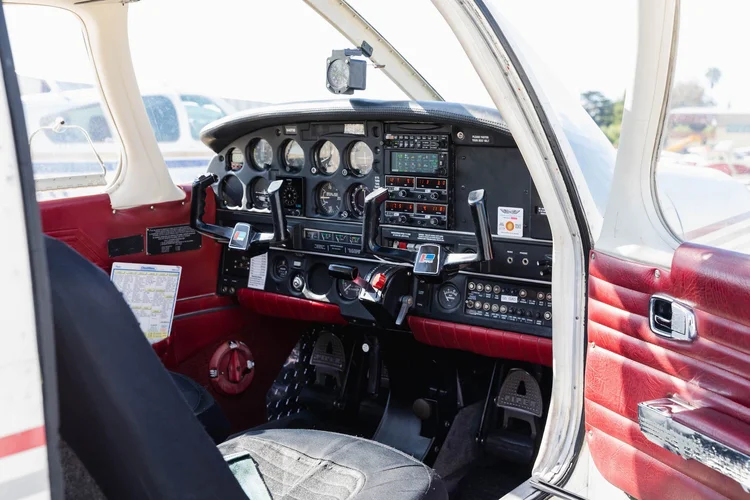
A common mistake among students comparing schools is treating ground school like a box to check before the “real” flying starts. That approach usually backfires. If ground school and flight lessons are scheduled far apart, concepts fade before you get to use them in the airplane, and you end up re-learning material mid-lesson instead of applying it.
At ActivePILOT, ground training is scheduled to run alongside your flight lessons, not as a separate phase you finish first. A private pilot student working through weather theory in ground school is often flying cross-country legs around the same stretch of training, so the material stays current. An instrument student studying an approach plate in the classroom is usually flying that same type of approach within days, not months later.
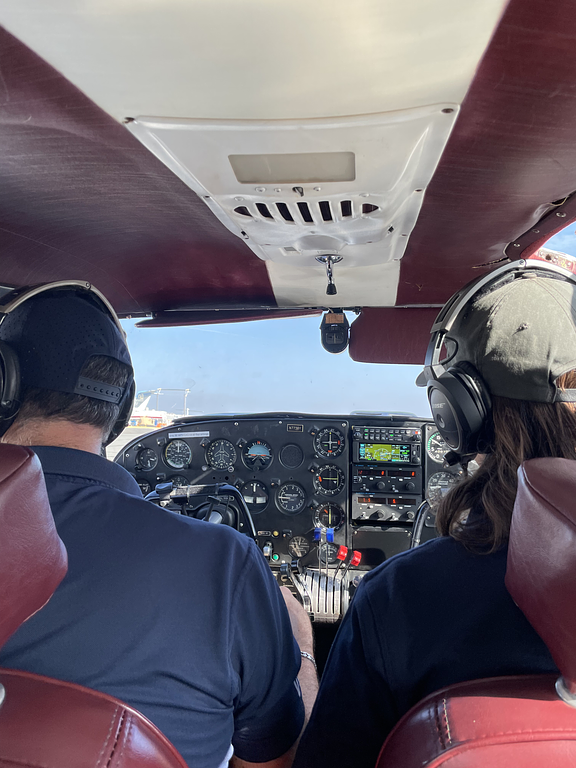
This is also where our Van Nuys training environment adds real value. Ground school concepts like radio phraseology, airspace transitions, and traffic pattern flow are not abstract when you train at one of the busiest general aviation airports in the world. You hear them, use them, and refine them on almost every flight.
Ground School Is What Gets You Ready for the Knowledge Test and the Oral Exam
Ground school has a clear destination: the FAA knowledge test and, later, the oral portion of your checkride. Before your practical test, you generally need to pass the applicable FAA knowledge test, and your examiner can question you on any area you missed. That is exactly why ground school is not optional self-study you can skip if you are a confident pilot in the airplane. The checkride oral exam and the knowledge test both measure how well you can explain what you know, not just whether you can perform it.
Our Commercial Pilot program makes this connection explicit. Ground school in that program is followed directly by the commercial pilot knowledge test, sometimes informally called the CAX, before students move into checkride preparation. The same pattern holds for private pilot and instrument students: ground school builds the knowledge base, the knowledge test confirms it, and the checkride oral exam is where you prove you can apply it under pressure.
If your longer-term goal includes flight instructing, this connection matters even more. Our CFI program leans into the pattern already covered on our CFI training guide, where classroom and one-on-one ground instruction prepare you to explain the same material you once had to learn yourself. Many students who add CFII training in Los Angeles find that a strong instrument ground-school foundation makes teaching instrument students far more natural later.
Choosing the Right Ground School Path for Your Goal
Not every student needs the same ground school. Your starting point should match where you are in your training, not a generic search result.
- New to flying? Start with the Private Pilot program, where ground school builds the regulatory, navigation, and weather foundation everything else depends on.
- Already have your private certificate and want to fly in weather? Our instrument rating course in Los Angeles pairs 30 classroom hours and 15 online video hours with real IFR flying. If you want the full picture of what earning the rating involves beyond ground school, our instrument rating guide covers the cost, Garmin cockpit training, and checkride path in more depth.
- Ready to fly professionally? The Commercial Pilot program ground school sharpens the technical judgment examiners expect from a professional-level applicant.
- Want to teach instead of just fly? The CFI program is built around learning to explain material clearly, with classroom hours for depth and individual ground instruction for delivery.
Whichever stage you are at, we run ground training on a pay-as-you-go basis, so you are not locked into a large upfront deposit before you know how the pace feels for you. If spreading the cost out helps you stay consistent, financing options are also available through Stratus Financial, AOPA Financing, and Columbia Bank.
FAQ: FAA Ground School in Los Angeles
What does FAA ground school actually cover?
Ground school covers the aeronautical knowledge required for your certificate or rating, including regulations, weather, navigation, aircraft systems, and, at more advanced stages, decision-making and teaching technique. The exact topics depend on whether you are training for private pilot, instrument rating, commercial pilot, or CFI.
Is ground school in-person, online, or both?
At ActivePILOT, it depends on the program. Our Instrument Rating program combines 30 hours of instructor-led classroom time with 15 hours of online video study. Our CFI program combines 104 hours of classroom instruction with 10 hours of individual, one-on-one ground instruction. Every program blends structured teaching with self-paced study.
Do I need to finish ground school before I start flying?
No. Ground school and flight lessons are scheduled to run together at ActivePILOT, so the concepts you learn on the ground stay fresh when you apply them in the airplane, instead of fading during a long gap between studying and flying.
How does ground school connect to the checkride?
Ground school prepares you for the FAA knowledge test, and the material you learn is also what your examiner questions you on during the oral portion of your checkride. Strong ground school preparation makes both stages more predictable.
Is instrument rating ground school different from private pilot ground school?
Yes. Private pilot ground school builds foundational knowledge like regulations, weather, and navigation. Instrument rating ground school goes deeper into approach procedures, clearance structure, and the instrument scan needed to fly without outside visual reference, which is why our Instrument Rating program dedicates 30 classroom hours and 15 online video hours specifically to that material.
Can simulator practice support my ground school studying?
Yes. Active ActivePILOT students get free access to our X-Plane simulator with PilotEdge capability, which is useful for rehearsing radio calls, approach setup, and procedures between ground school sessions. It is a basic, non-FAA-approved simulator, so it supports your study without replacing required aircraft or ground training.
Does CFI ground school prepare you to teach, not just fly?
Yes. CFI ground school shifts the goal from personal proficiency to teaching ability. Our CFI program’s 104 classroom hours build your knowledge base, while the 10 hours of individual ground instruction focus specifically on how clearly and confidently you can explain that material to a future student.
Start Your Ground Training at Van Nuys
Ground school is not a formality standing between you and the airplane. It is where your judgment, discipline, and confidence actually get built, and every ActivePILOT program is structured to keep it connected to your flight lessons instead of separated from them.
If you are ready to see how our 2026 ground training structure fits your goals, whether that is private pilot, instrument rating, commercial, or CFI, request information from ActivePILOT and we will help you map your ground school schedule alongside your flight training, simulator practice, and checkride path.


