
Aviation Schools in California: 2026 Guide to Choosing Los Angeles

Published by:
Ari Hovnanyan
Published on:
Updated on:
Read time:
9 min read
You have a browser tab open with six California flight schools in it, and every one of them looks about the same. Same fleet photos, same promise about your career, same vague answer when you go looking for what training will actually cost you. Somewhere in that tab pile is a school in Sacramento that looks cheaper per hour and a school in Los Angeles that looks closer to where you live, and you have no honest way to compare them.
Here is the thing nobody puts on a homepage: the airport matters more than the brochure, and your commute matters more than either. California is a huge training market with genuinely different regions, and the right choice depends less on which school is “best” than on which airspace you want in your logbook and how often you can realistically show up.
This guide walks through how the major California training regions actually differ, then explains where Los Angeles fits and who it suits.
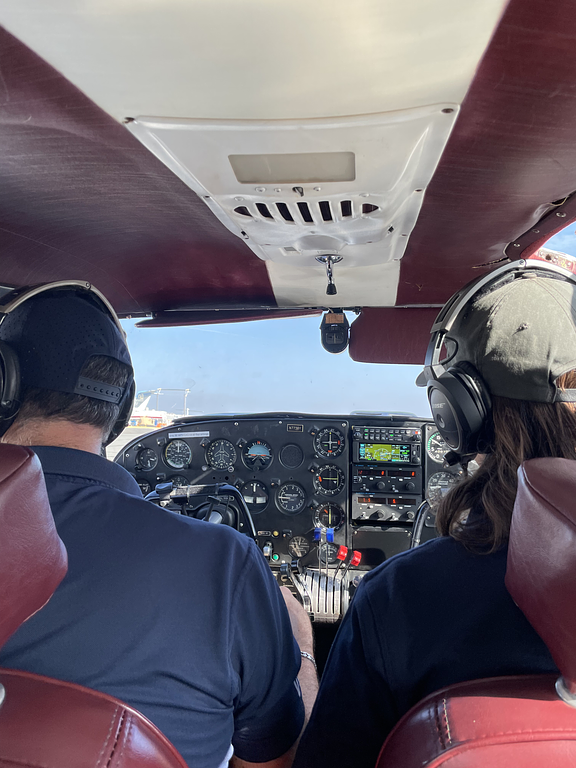
The Four California Training Regions, Honestly Compared
California is not one flight training market. It is at least four, and they produce noticeably different pilots.
Los Angeles basin. Dense, towered, and busy. You are talking to controllers from your first lessons, sequencing behind traffic, and learning to fly inside one of the most complex airspace systems in the country. Rates tend to run higher than rural California. Fleet depth is generally better because the schools are bigger.
Bay Area. Similar density and similar cost pressure, with terrain and marine layer conditions that make weather planning a real skill early. Excellent training environment, though aircraft availability at popular fields can be tight.
San Diego. Coastal weather, good year-round conditions, and proximity to military airspace that shapes how you plan every cross-country. Strong training culture, smaller market than LA.
Central Valley and inland. Lower hourly rates, quieter airports, more predictable weather. You will fly more hours for the same money. You will also arrive at your first busy Class C or Class D airport with less practice on the radio than a student who trained inside one.
None of those is the wrong answer. They are trades, and it is worth naming which trade you are making before you sign anything. If you want the full step-by-step on getting started, our guide on how to become a pilot in Los Angeles lays out the sequence.
Why the Hourly Rate Is the Wrong Number to Compare
The single most common mistake we see students make is shopping California schools on hourly rate. It is the easiest number to find and the least useful one to compare, because it tells you nothing about how many hours you will need.
The FAA sets a minimum of 40 hours for a Part 61 private pilot certificate. The FAA also reports that the U.S. average for private pilot completion sits closer to 75 hours. That gap of thirty-five hours is where your real budget lives, and almost nothing about it is determined by the sticker price of the airplane.
What moves you toward the low end of that range:
- Flying consistently. Two to three flights a week keeps skills warm. Long gaps mean paying to relearn.
- Aircraft availability. A cheap rate on an airplane you cannot book is not a cheap rate.
- Standardized aircraft. Switching between different panels burns lesson time on the equipment instead of the flying.
- Ground study between lessons. The reading you do at home is free. The reading you do in the cockpit is not.
That is why a school four freeway exits away often beats a cheaper school ninety minutes out. The commute quietly decides your cadence, and your cadence decides your total cost. You can compare our current program estimates on the pilot license pricing page, and financing options may be available to qualified applicants through Stratus Financial, AOPA Financing, and Columbia Bank — see the financing page for how those work.
What Training in Los Angeles Actually Gives You
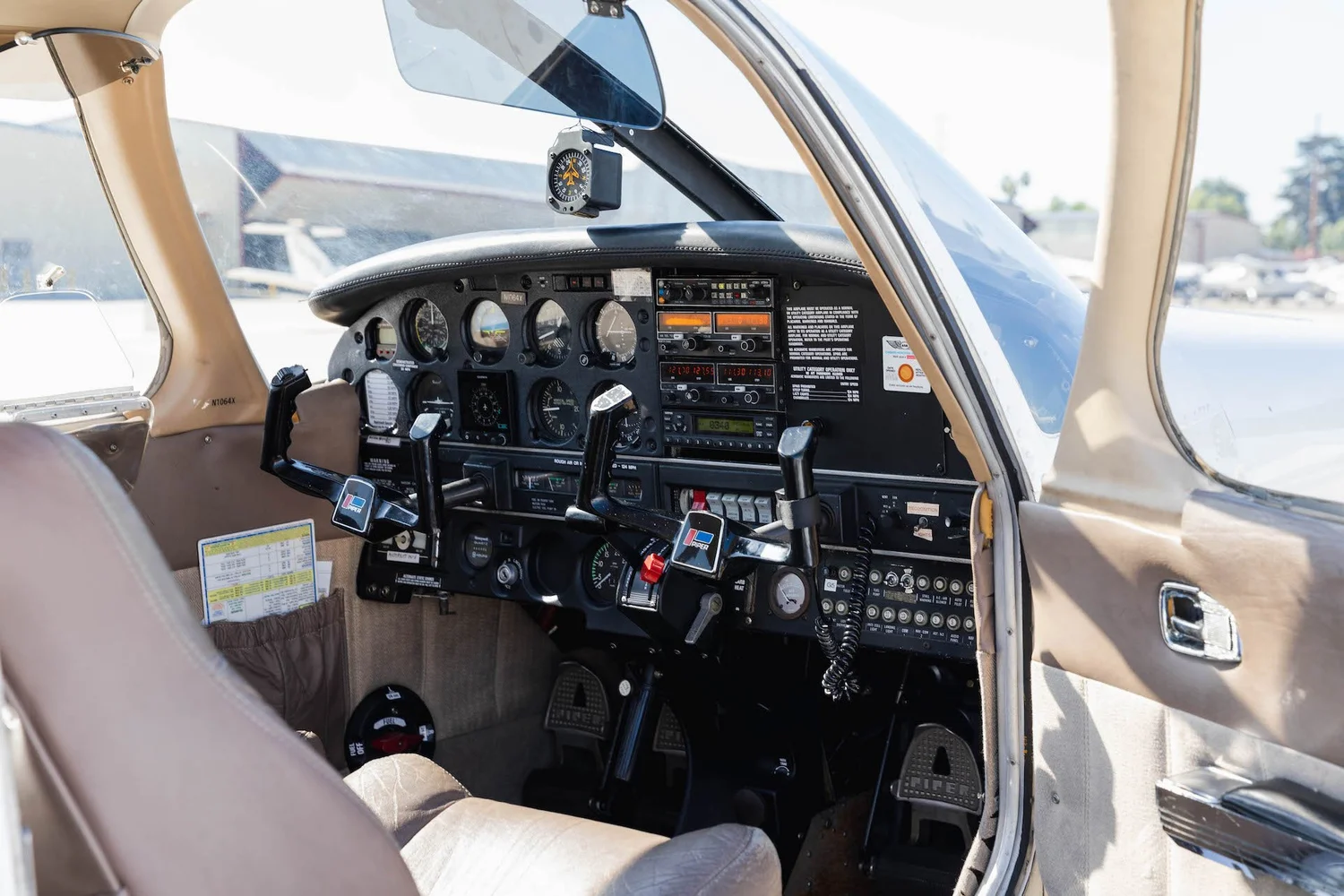
We train from Van Nuys Airport (KVNY), one of the busiest general aviation airports in the world. That fact cuts both ways, and we would rather you understand both edges of it.
The hard part: your first few radio calls at a towered field are uncomfortable. There is traffic, the frequency is busy, and you will feel behind the airplane for a couple of lessons.
The payoff: you get past that in month one instead of year two. A student who learns to fly here spends their entire training in the environment where professional flying happens. Radio work, traffic scanning, sequencing, and ATC compliance stop being special skills and become background habits. When you later fly into a busy field on a cross-country, it is a Tuesday, not an event.
The other Los Angeles advantage is fleet depth. We operate the largest Piper Warrior (PA-28) fleet at Van Nuys, all equipped with Garmin glass avionics. Standardization is underrated: flying the same cockpit layout every lesson means you build one set of repeatable habits instead of adapting to a different panel each time you book. Our Van Nuys flight school page covers what that looks like day to day.
Southern California weather is generally favorable for training, though no honest school will promise you an uninterrupted schedule. Marine layer mornings are real, and they are part of why an instrument rating gets useful here faster than in most of the country.
The Question That Actually Sorts California Schools
Forget the brochures for a second. When you narrow your list, the decisions that change your outcome are these four.
| Decision | Why it moves the needle | How we handle it |
|---|---|---|
| Can you get there twice a week? | Cadence sets your finish date more than anything else | Central KVNY location with fast freeway access from Burbank, Santa Clarita, Simi Valley, and Studio City |
| Will an airplane be available? | Fleet depth is what turns a schedule into progress | Largest Piper Warrior (PA-28) fleet at Van Nuys |
| What happens if life changes? | Large prepaid packages become a trap | Pay-as-you-go billing, no large upfront deposit |
| Who sets the training standard? | Standardization survives instructor turnover | Led by active airline captains flying the E-175 and B-737 |
That last row is the one we would push hardest on. Our leadership brought airline-level checklists, callouts, and standardization down into general aviation, which means the habits you build here are the habits that hold up later. You can see the full range of certificates and ratings on our training programs page.
Where Los Angeles Fits Into a Career Path
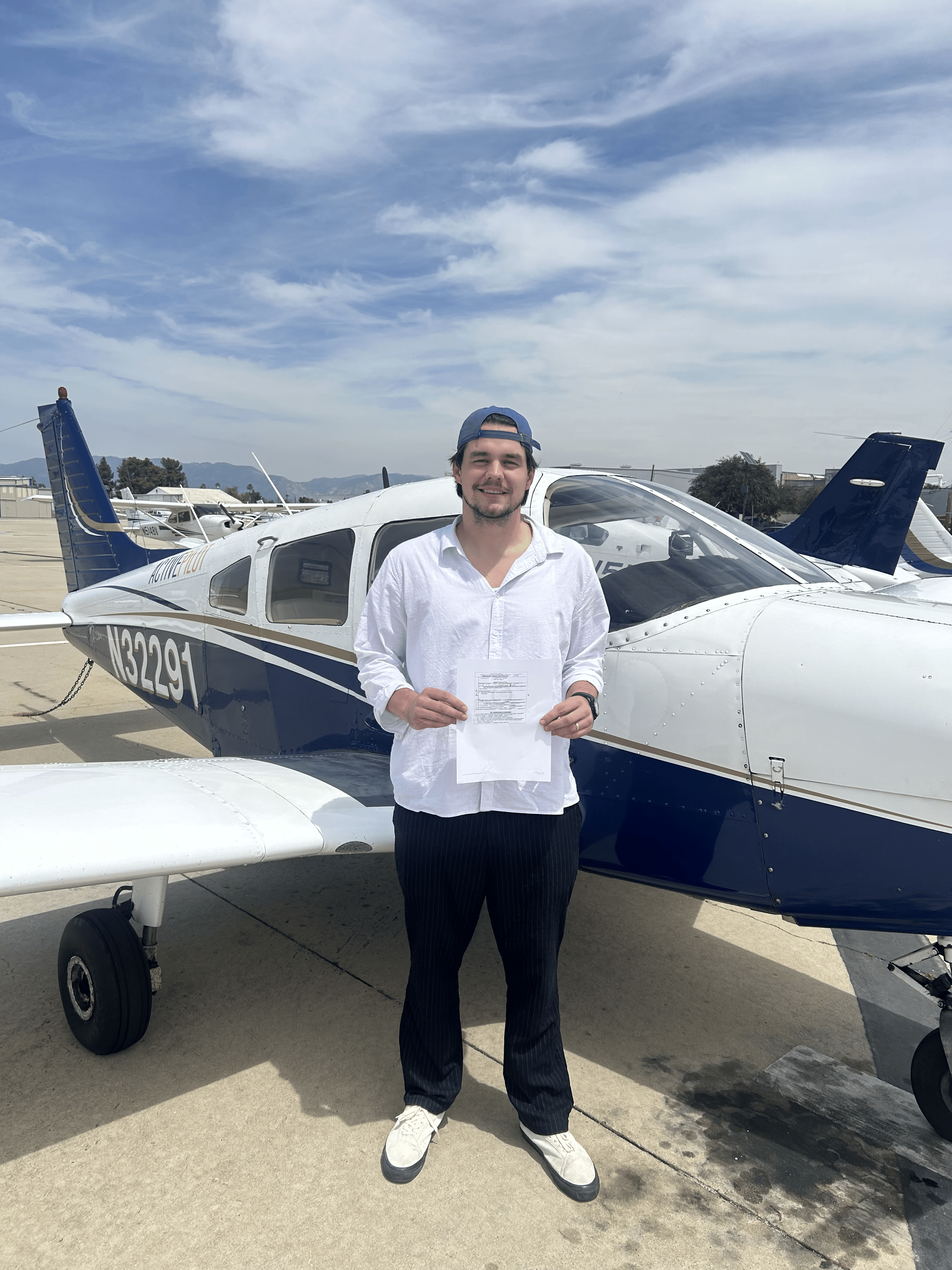
Many career-track pilots follow the same broad sequence: student pilot, private pilot certificate, instrument rating, commercial pilot certificate, flight instructor certificates, then ATP eligibility. It is a common path rather than a universal one, and each step has its own FAA requirements worth reading before you commit.
Two details worth getting right in your head early, because a lot of California school marketing blurs them:
- An instrument rating is a rating added to your certificate, not a separate pilot certificate.
- Multi-engine is a class rating added to your certificate, not a certificate of its own.
Where a Los Angeles school helps is density of opportunity. You can move from a first lesson through instrument, commercial, multi-engine, and CFI without changing schools or relearning a new fleet. Our accelerated multi-engine add-on runs about eight days, and our CFI course runs 30 days — that continuity is worth more than a small hourly discount somewhere else. If instructing is your hour-building plan, our CFI training page covers the path.
For the full breakdown of programs, weekly schedules, and 2026 cost ranges in one place, start with our flight training in Los Angeles guide.
Book a Discovery Flight and Compare From the Cockpit
Comparing California aviation schools on paper has a ceiling, and you have probably already hit it. Forty-five minutes at the controls will tell you more about whether a school fits you than another week of reading tabs — how the instructor teaches, how the airplane feels, how the radio sounds when it is actually your turn to talk.
Our $249 discovery flight includes a 15-minute pre-brief, 45 minutes of flight time with your hands on the controls, and a 15-minute debrief. It is flown with a certified instructor and logged toward your certificate, so it counts even if you decide to train somewhere else.
Book your discovery flight at Van Nuys and see the airspace for yourself.

.CbLPZiMB_Z2HPxB.webp)
.CCh9zi8h_Zkhw5v.webp)

