
Why Van Nuys Airport is the Best Place to Learn to Fly in Los Angeles

Published by:
Ari Hovnanyan
Published on:
Updated on:
Read time:
7 min read
When you start looking for a flight school in Los Angeles, you will find dozens of options spread across Southern California. Some schools operate from quiet, rural airports with little traffic. Others are based at small municipal fields where you might see a handful of takeoffs per hour. Then there is Van Nuys Airport — one of the busiest general aviation airports in the entire United States.
At first, that might sound intimidating. More traffic means more radio calls, more coordination, and more to pay attention to during your training flights. But here is what experienced pilots know: busy airports create better pilots. The skills you build at Van Nuys Airport will prepare you for real-world flying better than almost any other training environment in California.
ActivePILOT Flight Academy is located at Van Nuys Airport (KVNY), and that location is not just convenient — it is one of the biggest advantages you will have as a student pilot.
Over 220,000 Annual Operations: What That Means for Your Training
Van Nuys Airport recorded over 220,000 takeoffs and landings in 2016 alone. That number has remained consistent, making KVNY one of the most active general aviation hubs in the country. Every single day, hundreds of aircraft move through this airspace — from single-engine trainers like the ones you will fly, to twin-engine corporate jets, helicopters, and business aircraft.
This is not just a statistic. It is your training advantage.
When you fly out of a busy airport like Van Nuys, you learn to communicate clearly and efficiently on the radio from day one. You practice situational awareness in a high-density environment. You get comfortable with ATC instructions, traffic patterns with multiple aircraft, and the discipline required to maintain your position in the flow of air traffic.
You are not learning to fly in a quiet bubble. You are learning to fly in the same kind of environment you will experience throughout your entire aviation career — whether you go on to fly for the airlines, become a corporate pilot, or pursue other professional flying opportunities.
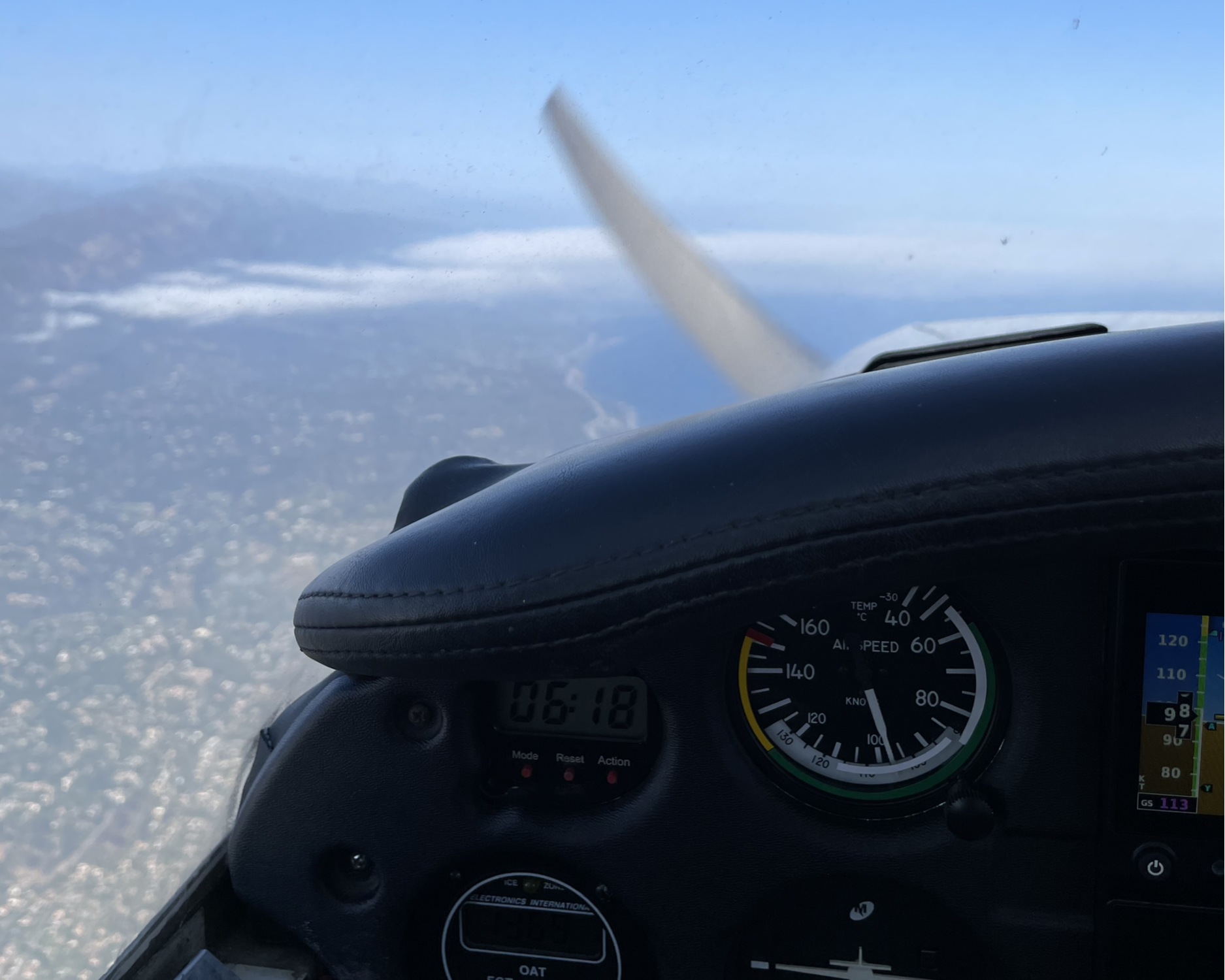
Two Parallel Runways Built for Training Efficiency
Van Nuys Airport offers something many training airports cannot: two parallel runways designed to handle different types of operations simultaneously.
The airport features an 8,000-foot runway equipped with an instrument landing system (ILS), which is the same type of precision approach system used at major airline airports. This runway gives you access to real-world instrument training right from the start of your Instrument Rating program.
The second runway is a 4,000-foot training runway dedicated primarily to flight training operations. This setup allows student pilots to practice takeoffs and landings without interfering with larger, faster aircraft using the main runway.
Why does this matter? Because you get to train efficiently without long waits or delays. You are not stuck in a single-runway traffic jam waiting for clearance. You can focus on building flight hours and mastering skills instead of sitting on the taxiway watching the clock.
Complex Airspace That Builds Professional Skills
Southern California airspace is some of the most complex in the United States. When you train at Van Nuys Airport, you operate inside Class D airspace, which requires communication with air traffic control for every takeoff and landing. You will also interact regularly with the surrounding Class B airspace of Los Angeles International Airport (LAX) and Burbank Airport (BUR).
This is not a drawback. This is exactly what prepares you for a professional aviation career.
Learning to navigate complex airspace as a student pilot means you will never be intimidated by busy terminals, controlled airspace, or high-density traffic areas later in your career. You build confidence through repetition. Every flight at Van Nuys reinforces the same skills that airline pilots, corporate pilots, and charter pilots use every single day.
If your goal is to become a Commercial Pilot or pursue airline training through programs like the Zero-1500 Airline Training Program, then training in complex airspace from the beginning gives you a head start that quieter airports simply cannot match.
Diverse Geography: Mountains, Coast, and Urban Flying
Van Nuys Airport sits in the heart of the Los Angeles Basin, which gives you access to an incredible variety of training environments within a short flight.
To the north, you have the San Gabriel Mountains and the Angeles National Forest — perfect for practicing mountain flying, high-density altitude operations, and navigation through challenging terrain. To the west, the Pacific Coast offers coastal flying, marine layer weather conditions, and the chance to practice approaches over water. And all around you is the sprawling urban landscape of Los Angeles, where you will learn to navigate using landmarks, VORs, and GPS in one of the busiest metropolitan areas in the country.
This variety matters. Pilots who train in only one type of environment often struggle when they encounter new conditions. But when you train at Van Nuys, you experience mountains, coast, desert, and city flying all within the same training program.
| Training Environment | Distance from KVNY | Skills Developed |
|---|---|---|
| San Gabriel Mountains | 15-20 miles north | Mountain flying, high-density altitude, terrain navigation |
| Pacific Coast | 20-25 miles west | Coastal navigation, marine layer operations, over-water procedures |
| Los Angeles Basin | On-site | Urban navigation, complex airspace, high-traffic operations |
| High Desert (Palmdale/Lancaster) | 40-50 miles north | Hot weather operations, crosswind practice, long cross-country flights |
This geographic diversity is built into your training from day one — not as an extra feature, but as a core part of how you learn to fly.
Training Alongside Airline Captains Who Know the Industry
ActivePILOT Flight Academy was co-founded by Ari Hovnanyan and Leonardo Aristizabal, both active airline captains. Ari flies the Embraer E-175, and Leonardo flies the Boeing 737. These are not instructors who flew for the airlines years ago and now teach on the side. These are professionals who are still flying the line, still operating in the same airspace you will one day work in, and still connected to the realities of modern commercial aviation.
What does that mean for you? It means your training is designed around real-world standards, not outdated methods. It means you learn procedures, flows, and decision-making frameworks that translate directly to airline operations. And it means you have access to mentors who understand exactly what it takes to succeed in professional aviation — because they are doing it right now.
ActivePILOT has trained hundreds of pilots who have gone on to careers at major airlines and corporate charter companies. That track record is not an accident. It is the result of a training environment that prioritizes professional excellence, real-world readiness, and student-centric success from the very first lesson.
.png)
The Largest Fleet of Piper Warriors at Van Nuys Airport
ActivePILOT operates the largest fleet of Piper Warrior aircraft at Van Nuys Airport. These PA-28-151 and PA-28-161 models are the backbone of the training programs, from Private Pilot License (PPL) through Certified Flight Instructor (CFI) training.
Why does fleet size matter? Because it means you can fly when you want to fly. There are no long waitlists. There are no scheduling bottlenecks. When you are ready to fly, an aircraft is ready for you.
Every aircraft in the fleet is equipped with either a standard 6-pack instrument layout or technically advanced avionics (TAA), including:
- Garmin G5 primary flight displays
- Garmin G375 GPS/transponder systems
- GI-275 dual-stack displays with moving maps
- Garmin GNX 375 and Garmin 345 audio panels
- ADS-B In/Out for real-time traffic and weather
The fleet is standardized, which means you do not waste time re-learning a different cockpit layout every time you switch aircraft. You build consistency. You build confidence. And you build flight hours faster because you are not starting from scratch with each new airplane.
All aircraft are constantly serviced, and maintenance issues are dealt with immediately and efficiently. You are not flying old, worn-out trainers. You are flying well-maintained, modern aircraft equipped with the same avionics you will use in your professional career.
Faster Checkride Scheduling Through DPE Relationships
One of the biggest frustrations in flight training across the country is checkride delays. Many flight schools report wait times of 3 to 4 months just to schedule a checkride with a Designated Pilot Examiner (DPE). That delay can cost you thousands of dollars in lost time, additional flight hours just to stay current, and months of uncertainty about when you will finally earn your certificate.
ActivePILOT has solved this problem.
Through long-standing relationships with three Designated Pilot Examiners, the school has brought checkride scheduling down to approximately one month — a fraction of the industry average. This is not luck. This is the result of years of professional relationships, consistent student preparation, and a reputation for producing well-trained pilots who show up ready to pass their checkrides.
Faster checkrides mean faster career progression. If your goal is to build hours and move into a professional flying role, every month counts. ActivePILOT makes sure you are not stuck waiting.
Pay As You Go: No Surprises, No Upfront Deposits
Flight training is expensive. There is no way around that. But one of the biggest concerns students have is the fear of being locked into a massive upfront payment with no transparency about where the money goes.
ActivePILOT operates on a Pay As You Go policy. You are not required to make large advance deposits. You only pay for the flight hours you actually receive, and all transactions are tracked transparently so you can see exactly how your money is being spent.
If you need help managing costs, the school offers access to financing options that make training more affordable without forcing you into rigid payment plans.
This policy removes the financial pressure and lets you focus on what matters: learning to fly.
Free Simulator Access for Skill Retention
One of the hidden costs of flight training is the price of staying current. If life gets in the way and you cannot fly for a few weeks, you might need extra flight hours just to get back up to speed. At $175 to $185 per hour for aircraft rental, those “refresher” flights add up quickly.
ActivePILOT provides free access to X-Plane simulators for all active students. You can practice instrument flows, navigation procedures, and radio communication without paying for aircraft time. This keeps your skills sharp between flights and saves you money in the long run.
The school also uses One-G Foundation simulators based on the Cessna 172 for structured training scenarios. Simulators are not just a cost-saving tool — they are a skill-building tool that lets you practice complex procedures in a controlled environment before you attempt them in the air.
Frequently Asked Questions
-
Is Van Nuys Airport too busy for student pilots?
No. The high traffic volume at Van Nuys Airport is actually an advantage. You learn to communicate clearly, maintain situational awareness, and operate confidently in busy airspace from day one. These are the same skills you will need throughout your aviation career.
-
How long does it take to get a Private Pilot License at ActivePILOT?
The Private Pilot License requires a minimum of 40 hours of flight time, though most students complete it in 50 to 70 hours. ActivePILOT’s structured program and aircraft availability help you train consistently and finish faster.
-
Does ActivePILOT offer financing for flight training?
Yes. The school provides access to financing options that make training more affordable. You can also take advantage of the Pay As You Go policy, which eliminates large upfront deposits.
-
What aircraft will I train in?
You will train in Piper Warrior aircraft (PA-28-151 and PA-28-161) equipped with standard 6-pack instruments or technically advanced avionics, including Garmin G5 displays, GI-275 systems, and ADS-B In/Out.
-
Can I schedule a discovery flight to see if flying is right for me?
Yes. ActivePILOT offers a $249 Discovery Flight that includes 45 minutes of flight time, a 15-minute pre-brief, and a 15-minute post-brief. With flight availability Monday through Sunday, this is the best way to experience what flight training is actually like before committing to a full program.
-
How quickly can I schedule a checkride after finishing my training?
ActivePILOT has relationships with three Designated Pilot Examiners, which brings checkride scheduling down to approximately one month — much faster than the industry average of 3 to 4 months.
-
What happens after I get my Private Pilot License?
You can continue your training with an Instrument Rating, Commercial Pilot License, Multi-Engine Add-on, or Certified Flight Instructor certification. Many students also pursue the Zero-1500 Airline Training Program, which takes you from zero flight time to airline-ready in seven months.
Start Your Training at Van Nuys Airport
Van Nuys Airport is not just a convenient location. It is one of the best training environments in the country. The high traffic volume, complex airspace, diverse geography, and professional infrastructure create the perfect conditions for building real-world aviation skills.
If you want to train at a Los Angeles flight school that prepares you for a professional flying career, ActivePILOT Flight Academy is the place to start.
Ready to see what training at Van Nuys Airport is really like? Book your Discovery Flight today, or request more information about the programs that fit your aviation goals.
.CCh9zi8h_Zkhw5v.webp)


.C-Efj3b8_Z2w6RFH.webp)
.CbLPZiMB_Z2HPxB.webp)