.C-Efj3b8_Z2w6RFH.webp)
Flying Lessons in Van Nuys: What Your First Month of Flight Training Looks Like (2026 Guide)

Published by:
Ari Hovnanyan
Published on:
Updated on:
Read time:
11 min read
You booked your first lesson, and now you want to know what actually happens next. Is it just a joyride, or are you really flying the airplane? How fast do you touch the controls yourself? When do you fly solo, and what does the first month cost before you are in too deep? Those are the right questions to ask before you start, and this guide walks you through them.
If you are starting flying lessons in Van Nuys in 2026, your first month sets the tone for everything after it. Get consistent, build good habits early, and the path to a Private Pilot License feels steady instead of scary. This is a week-by-week look at what your first four weeks of flight training in Van Nuys look like at ActivePILOT, so you can walk into lesson one knowing exactly what to expect.
Week One Starts With a Discovery Flight
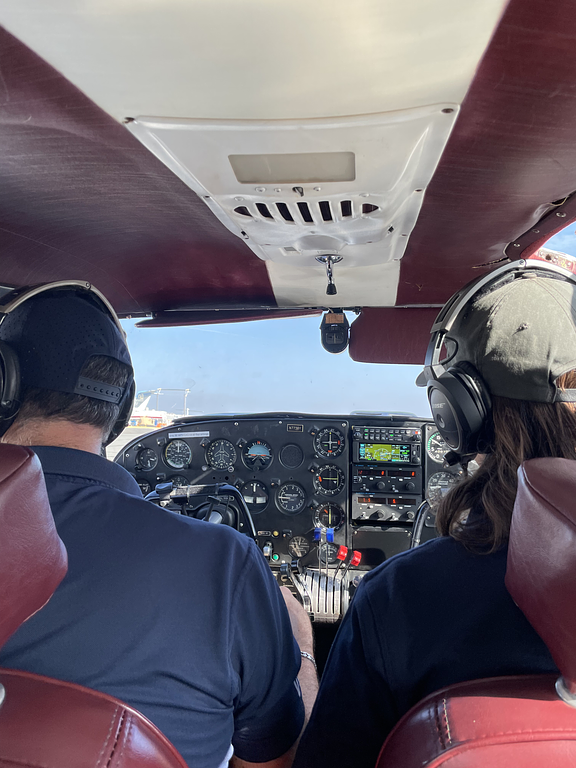
Almost every student begins the same way: with a Discovery Flight. This is not a passenger ride. You sit in the left seat, put on a headset, and fly the airplane yourself with an instructor coaching every input from the right seat.
A typical Discovery Flight runs about 45 minutes in the air, with a short brief before you take off and a short debrief after you land. You will taxi out at Van Nuys Airport, feel the airplane lift off the runway, and hand-fly gentle turns and climbs over the San Fernando Valley. Most people are surprised by how much they actually do on day one.
Here is what your first flight is really for:
- Proving to yourself that you can do this. The controls are more intuitive than they look from the ground.
- Meeting your instructor and seeing how they teach before you commit to a full program.
- Feeling the airport. Van Nuys is busy, and getting comfortable with that energy early pays off for months.
If you want the full walkthrough of that first flight before you book, the complete Discovery Flight guide covers the pricing, the brief, and what to bring. When you are ready, you can book a Discovery Flight directly.
Your First Real Lessons: Hands on the Controls
Once you decide to keep going, weeks one and two shift from one-time flight to a training rhythm. Your instructor builds each lesson around the Private Pilot syllabus, and you fly the airplane for almost the entire time.
Your early lessons focus on the four fundamentals every pilot builds on: straight-and-level flight, turns, climbs, and descents. You will also start learning to use the radio, taxi the airplane, and run through checklists. At a busy field like Van Nuys, radio work starts early on purpose. Talking to the tower feels intimidating at first, and then it becomes second nature faster than you expect.
Fly two or three times a week and you will feel real momentum by the end of the month. Fly once every few weeks and you spend part of each lesson relearning the last one. Consistency is the single biggest thing in your control, and it is the cheapest way to keep your total training cost down.
.png)
You train in our standardized Piper Warrior fleet, so the cockpit looks the same every lesson. That sounds like a small detail, and it is not. When the panel, switches, and avionics are identical flight to flight, you spend paid lesson time building skill instead of hunting for a knob in a different layout. You can see the aircraft you will fly on the ActivePILOT fleet page.
Ground School Runs Alongside Your Flying
Flying is only half of your first month. The other half is ground school, where you learn the aeronautical knowledge behind everything you do in the airplane: airspace, weather, navigation, aircraft systems, and the rules of the sky. This is what prepares you for the FAA knowledge test on the way to your certificate.
You do not have to master it all in month one. What matters early is building the study habit: a little each week, tied to what you just flew. When you fly steep turns in the morning and read about load factor that night, the lesson sticks.
This is also where the simulator earns its keep. Active students get free simulator access to run through flows, procedures, and radio calls between flights. A tricky pattern entry that costs money in the airplane costs nothing on the sim, so you show up to your next real lesson already ahead. The ActivePILOT simulator program is one of the fastest ways to make each flight hour count.
If you are brand new to all of this, the new-to-flying starting guide breaks down the vocabulary and the certificate path in plain language.
The First-Solo Milestone Is Closer Than You Think
Ask most student pilots about their proudest moment and they will point to their first solo. It is the day your instructor steps out, the right seat sits empty, and you take the airplane around the pattern by yourself.
You will not solo in your first month, and that is normal. But your first month is where the foundation gets built. You can legally solo an airplane at 16 and earn a Private Pilot License at 17, and there is no upper age limit, so students of almost any age start this journey. Before you solo, you will hold at least a third-class FAA medical certificate from an authorized examiner, and you will need to read, speak, write, and understand English. Your instructor will walk you through the medical step during these early weeks so nothing sneaks up on you later.
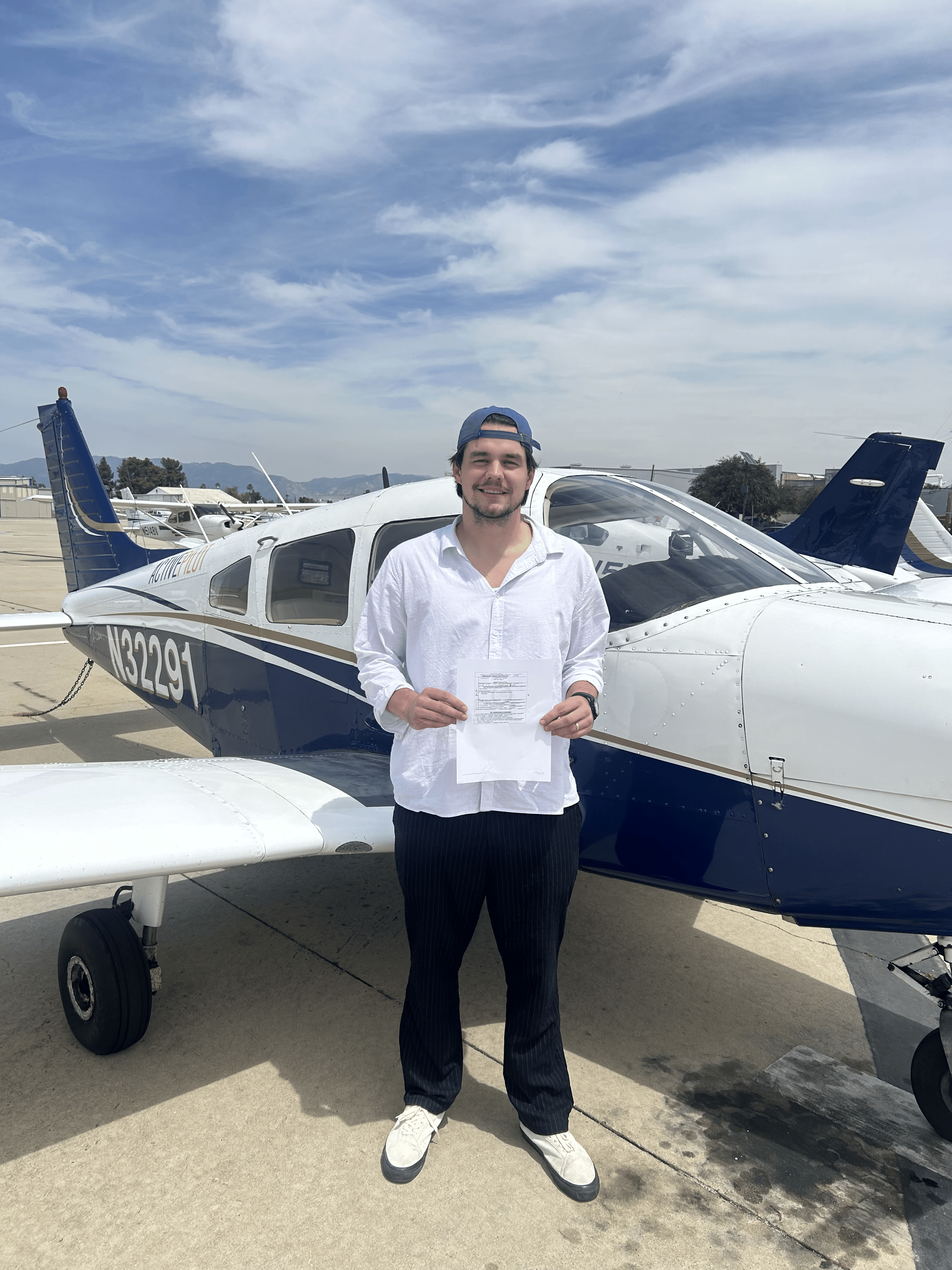
The Private Pilot certificate takes a minimum of 40 flight hours under the FAA rules, and most students take somewhat more. Many finish in roughly three to six months of steady training. Your first month is where that timeline gets set, because the students who fly consistently early tend to move through the milestones without backsliding. The FAA outlines the certificate and eligibility basics if you want the official framing.
What Your First Month Costs, and How to Keep It Manageable
Money is the question everyone circles back to. The honest answer is that your total cost is driven less by the sticker rate and more by how often you fly and how well you study between lessons.
A few things keep your first month in Van Nuys manageable:
- Pay-as-you-go pricing. There is no large upfront deposit. You keep a card on file and pay for lessons and aircraft time as you use them, so you stay in control from day one.
- Free simulator practice. Reps on the sim reduce the number of real flight hours you burn learning a procedure.
- Consistency. Flying twice a week instead of twice a month means fewer review lessons, which is where hidden costs hide.
If you would rather spread the cost, financing is available through partners like Stratus Financial, AOPA Financing, and Columbia Bank. You can compare options on the ActivePILOT financing page, and you can review program ranges on the pilot license pricing page so your budget has real numbers behind it. For a deeper breakdown of where the money actually goes, read the real cost of a pilot license in Los Angeles.
Why Van Nuys Makes a Strong First Month
Your training airport shapes the pilot you become, and Van Nuys is one of the best classrooms in the country. Van Nuys Airport (KVNY) is one of the busiest general aviation airports in the world, with parallel runways and complex Class D airspace. The FAA describes Van Nuys as a busy field with mixed traffic, which is exactly the environment that builds sharp habits early.
A quieter airport can feel easier in week one. The trade-off is that you eventually have to learn busy-airport skills anyway, and relearning them later costs time. Start at Van Nuys and radio work, traffic awareness, and controlled-field procedures become normal from the beginning. For the full picture of why this airport is a strong home base, see the flight school in Van Nuys page, and if you are weighing several schools, the guide on how to choose a flight school in Los Angeles gives you a clear checklist.
FAQ
-
How soon do I fly the airplane myself?
On your very first lesson. During a Discovery Flight you handle the controls with your instructor coaching you, and your regular lessons keep you flying the airplane for most of the time in the air.
-
How often should I take flying lessons in my first month?
Two to three times a week is the sweet spot. Consistent flight training in Van Nuys builds momentum, keeps skills fresh, and reduces the review lessons that quietly raise your total cost.
-
Do I need a medical certificate before my first flying lesson in Van Nuys?
No. You can start lessons and even take a Discovery Flight without one. You will need at least a third-class FAA medical certificate before you fly solo, and your instructor helps you handle that during your early training.
-
Will I solo in my first month?
Usually not, and that is normal. Your first month builds the foundation. First solo comes once you and your instructor agree your takeoffs, landings, and decision-making are solid and safe.
-
What questions should I bring to my first month of training?
Ask about lesson frequency, simulator access, how progress is tracked, and payment structure. You can also review the flight school Van Nuys FAQs for quick answers before you start.
Ready to Start Your First Month in the Air?
Your first month of flying lessons in Van Nuys is where a dream turns into a real, trackable skill. You will fly the airplane from day one, build habits at one of the world’s busiest airports, and see exactly how the path to a certificate unfolds. The best way to begin is the same way thousands of pilots did before you. Book your Discovery Flight and take the first real step into 2026 with a headset on and your hands on the controls.


.CCh9zi8h_Zkhw5v.webp)


