
From Zero to Airline Pilot: Your Complete Training Roadmap at ActivePILOT

Published by:
Ari Hovnanyan
Published on:
Updated on:
Read time:
9 min read
If you have ever dreamed of becoming an airline pilot, you have probably wondered: how long does it actually take? What are the steps? How many hours do I need? And most importantly, is this career path realistic for someone starting from zero flight experience?
The truth is that the path from zero to airline pilot is well-defined, measurable, and achievable. It is not a mystery. There are clear milestones, specific hour requirements, and proven training sequences that thousands of pilots have followed to successful airline careers.
ActivePILOT Flight Academy has trained hundreds of pilots who have gone on to major airlines and corporate charter companies. The school is managed by active airline captains who are currently flying the line at major carriers. They know exactly what it takes to get hired, and they have built a training program that prepares you for every step of the journey.
This is your complete roadmap from zero hours to airline-ready pilot.
The Five Certifications That Build Your Airline Career
Your flight training career path is built on five core certifications. Each one unlocks new privileges, new responsibilities, and new opportunities. Think of them as levels in a career progression system, where each level builds on the skills you developed in the previous one.
Here is the sequence:
- Private Pilot License (PPL) — Allows you to act as pilot-in-command and carry passengers under Visual Flight Rules (VFR)
- Instrument Rating (IR) — Allows you to fly in clouds, low visibility, and instrument meteorological conditions (IMC)
- Commercial Pilot License (CPL) — Allows you to get paid to fly
- Multi-Engine Add-On — Allows you to fly aircraft with more than one engine
- Certified Flight Instructor (CFI, CFII, MEI) — Allows you to teach other pilots and build the hours you need for airline hiring
Once you complete these five certifications, you will have the credentials to work as a flight instructor while building toward the 1,500 hours required for an Airline Transport Pilot (ATP) certificate, which is the minimum requirement to fly for a U.S. airline under Part 121 operations.
ActivePILOT’s Zero-1500 Airline Training Program takes you through all five certifications in seven months, then positions you to build the remaining hours as a paid flight instructor.
Stage 1: Private Pilot License (Month 1 to Month 3)
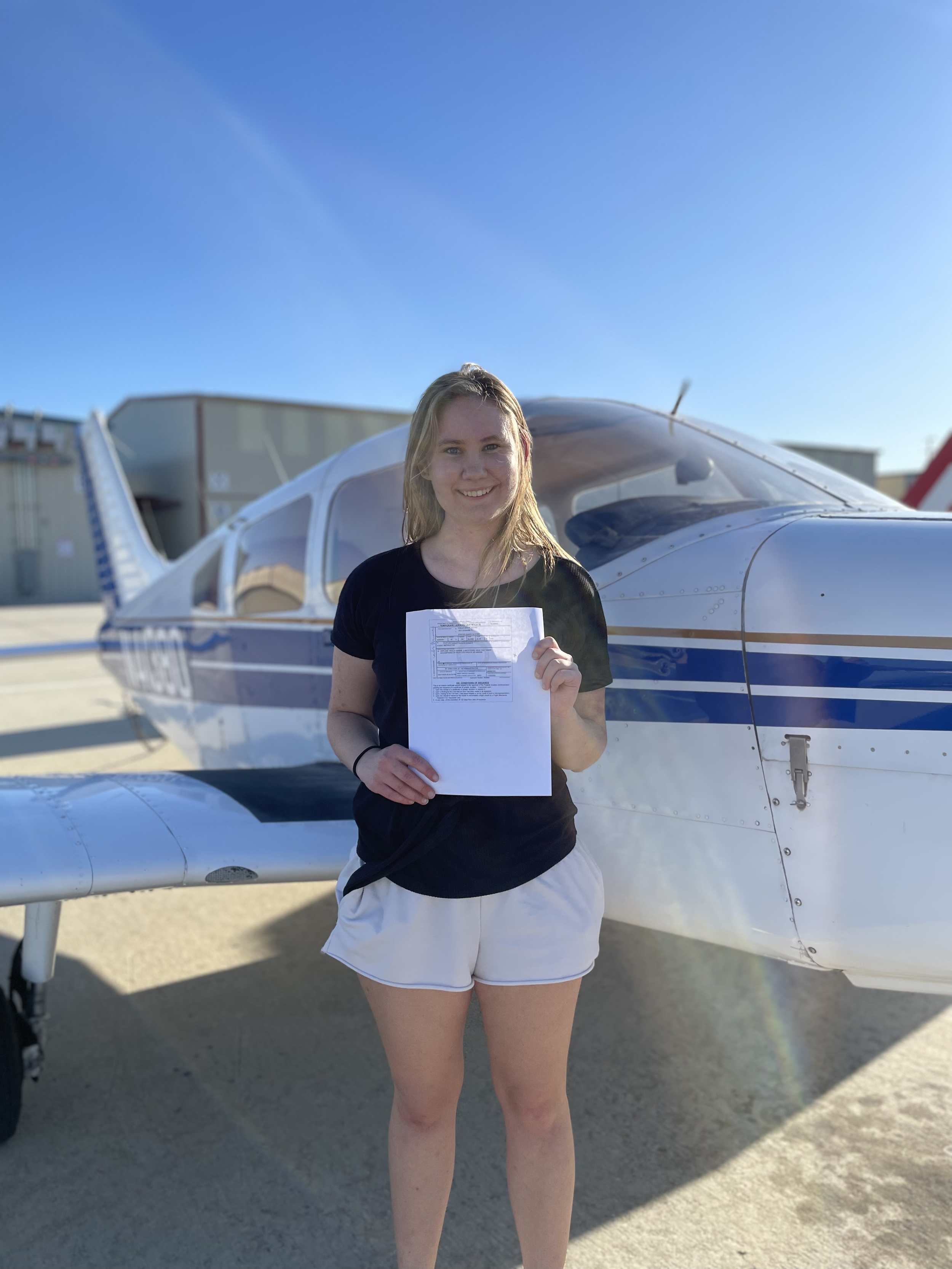
Your journey starts with the Private Pilot License. This is the foundation of everything else you will do in aviation. The PPL teaches you the fundamental skills of flying an aircraft: takeoffs, landings, navigation, weather planning, emergency procedures, and decision-making.
The Federal Aviation Administration (FAA) requires a minimum of 40 hours of flight time to earn your Private Pilot License. However, the national average is closer to 60 to 70 hours. ActivePILOT structures its PPL program around 50 hours, which is a realistic target for students who fly consistently and prepare thoroughly for each lesson.
What you will learn:
- Aircraft control and basic flight maneuvers
- Navigation using pilotage, dead reckoning, and GPS
- Communication with air traffic control
- Weather analysis and flight planning
- Night flying operations
- Solo cross-country navigation
- Emergency procedures and decision-making
Timeline: Most students complete their Private Pilot License in 3 to 6 months if they fly two to three times per week. Students who fly less frequently will take longer, and students who fly more often can finish faster.
Training at Van Nuys Airport (KVNY) gives you a significant advantage during this stage. With over 220,000 annual operations, Van Nuys is one of the busiest general aviation airports in the United States. You will learn to operate in complex airspace from day one, which builds the confidence and proficiency that quieter airports cannot match.
By the time you finish your PPL, you will have the skills to fly an aircraft safely and the foundation to build toward professional certifications.
Stage 2: Instrument Rating (Month 4 to Month 5)
The Instrument Rating is the most important certification you will earn on your path to becoming an airline pilot. This is what separates recreational pilots from professional pilots.
An Instrument Rating allows you to fly in clouds, low visibility, and instrument meteorological conditions (IMC). It teaches you to control the aircraft entirely by reference to instruments, navigate using radio aids and GPS, and execute precision approaches to minimums.
Airlines will not hire you without an Instrument Rating. It is non-negotiable.
The FAA requires 40 hours of instrument flight time and 50 hours of cross-country flight time. Most students complete their Instrument Rating in 50 to 60 total hours, depending on their proficiency and how much time they spend in simulators.
What you will learn:
- Instrument flight maneuvers and procedures
- IFR navigation using VOR, GPS, and instrument approaches
- Precision and non-precision approach procedures
- Holding patterns and airway navigation
- IFR flight planning and weather analysis
- Use of modern avionics and autopilot systems
ActivePILOT’s fleet is equipped with Garmin G5 displays, GI-275 systems, Garmin GNX 375, and ADS-B In/Out, which means you train on the same avionics used in modern commercial aircraft. This is not outdated steam-gauge training. This is real-world, career-relevant instrument flying.
The school also provides free access to X-Plane simulators for all active students. You can practice instrument flows, approach procedures, and navigation without paying for aircraft time. This keeps your skills sharp and reduces the total cost of your training.
Timeline: Students who train consistently complete their Instrument Rating in 2 to 3 months.
Stage 3: Commercial Pilot License (Month 6 to Month 7)
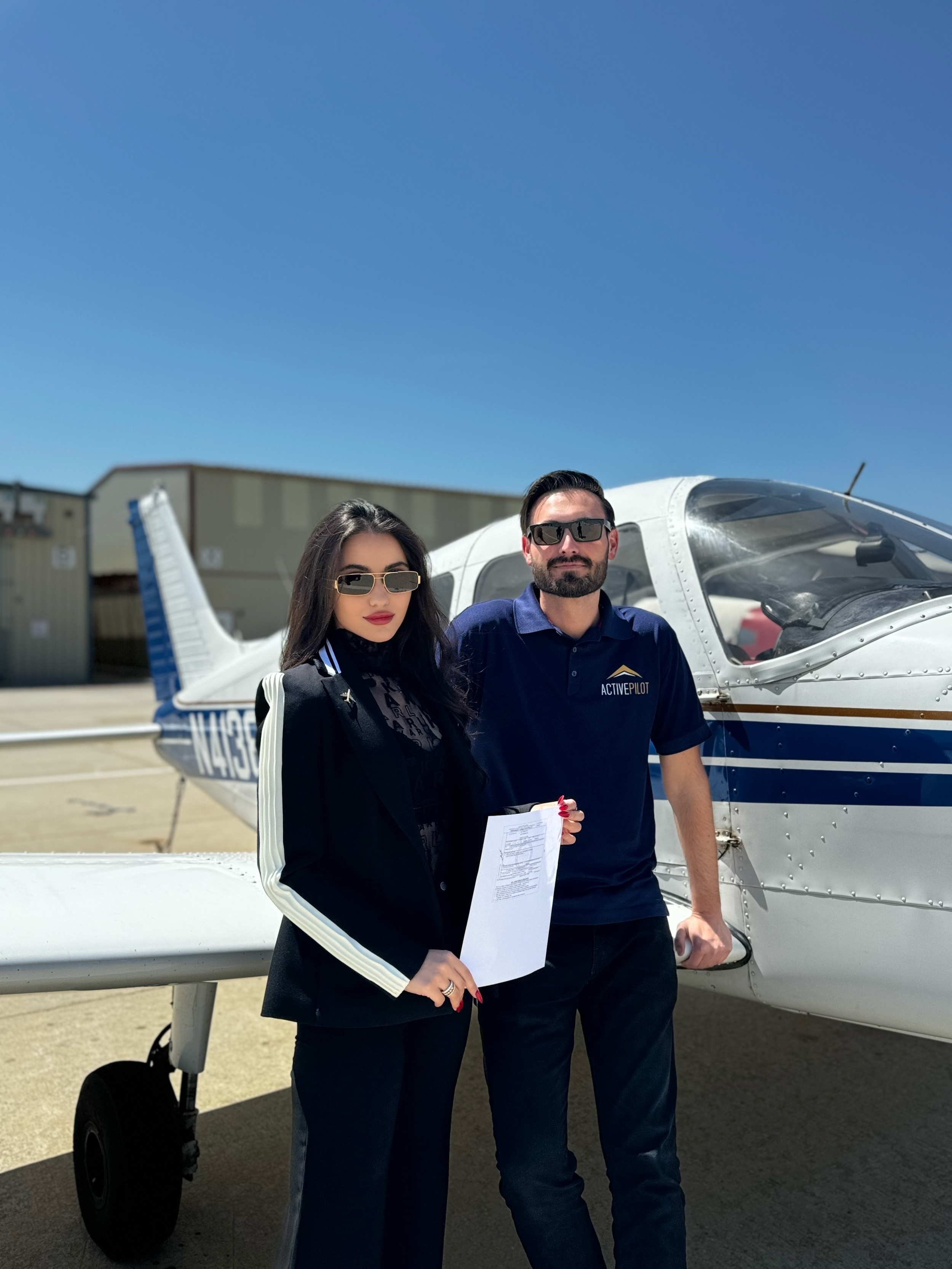
The Commercial Pilot License is the certification that allows you to get paid to fly. With a CPL, you can work as a flight instructor, charter pilot, banner-tow pilot, pipeline patrol pilot, or in dozens of other commercial aviation roles.
The FAA requires 250 total flight hours to earn your Commercial Pilot License. By the time you finish your Private Pilot License and Instrument Rating, you will have around 100 to 130 hours. The remaining hours must be built through time-building flights, solo cross-country navigation, and commercial maneuvers training.
What you will learn:
- Complex aircraft operations
- Advanced flight maneuvers (chandelles, lazy eights, steep spirals)
- Commercial cross-country requirements
- Crew resource management principles
- Decision-making under time pressure
- Checkride preparation with real-world scenarios
ActivePILOT operates Piper Warrior aircraft (PA-28-151 and PA-28-161) for primary training and Piper Twin Comanche (PA-30) aircraft for multi-engine operations. The fleet is standardized, which means you do not waste time re-learning different cockpit layouts as you progress through your training.
Building 250 hours is the biggest time investment in your training. But here is the advantage of training at a busy airport: you build real-world experience in every flight. At Van Nuys, you are not flying around empty practice areas. You are operating in complex airspace, communicating with air traffic control, and navigating around other aircraft. Every flight builds the skills that airlines value.
Timeline: Most students reach 250 hours and complete their Commercial Pilot License within 7 months of starting training if they follow a structured, full-time schedule.
Stage 4: Multi-Engine Add-On (Concurrent with CPL)
The Multi-Engine Add-On certification allows you to fly aircraft with more than one engine. Most airlines and corporate operators require multi-engine experience, so this rating is essential if you want to move into professional flying roles.
ActivePILOT offers an 8-day accelerated multi-engine course that gets you certified quickly and efficiently. The program uses the Piper Twin Comanche (PA-30), a reliable twin-engine trainer that has been the backbone of multi-engine training for decades.
What you will learn:
- Multi-engine aerodynamics and performance
- Engine-out procedures and emergency operations
- Single-engine approaches and landings
- Vmc demonstrations and recognition
- Crew coordination in multi-crew environments
Multi-engine training is more expensive per hour than single-engine training because the aircraft burns more fuel and requires more maintenance. However, the accelerated structure of the course minimizes total costs by getting you through the rating in a compressed timeframe.
Timeline: The multi-engine add-on can be completed in 8 days and is typically done concurrently with or immediately after your Commercial Pilot License.
| Certification | Minimum FAA Hours | Typical Completion | Key Milestone | Career Unlock |
|---|---|---|---|---|
| Private Pilot License | 40 hours | 50-70 hours | Solo flight, first cross-country | Legal to carry passengers |
| Instrument Rating | 40 hours instrument | 50-60 hours total | First approach to minimums | Fly in IMC conditions |
| Commercial Pilot License | 250 total hours | 250 hours | Commercial checkride pass | Get paid to fly |
| Multi-Engine Add-On | N/A (add-on) | 8-day course | Multi-engine checkride | Fly multi-engine aircraft |
| Certified Flight Instructor | N/A (instructor rating) | 30-day academy | First student solo | Teach and build hours |
Stage 5: Certified Flight Instructor (Month 7 and Beyond)
The Certified Flight Instructor (CFI) certification is how most pilots build the 1,500 hours required to work for an airline. Instead of paying to rent an aircraft and build hours on your own, you get paid to teach other students while building your own flight time.
ActivePILOT offers a 30-day CFI Academy that prepares you for the CFI, CFII (Certified Flight Instructor - Instrument), and MEI (Multi-Engine Instructor) checkrides. The program is taught by active airline captains who understand exactly what it takes to succeed in a professional flying career.
What you will learn:
- Teaching techniques and instructional methods
- Advanced flight maneuvers and error correction
- Systems knowledge and technical explanations
- Risk management and aeronautical decision-making
- FAA regulations and certification standards
Becoming a flight instructor is not just a time-building strategy. It is one of the best ways to solidify your own flying skills, improve your decision-making, and develop the communication skills that airlines value in their pilots.
According to the Federal Aviation Administration, the Airline Transport Pilot (ATP) certificate requires 1,500 hours of total flight time for most pilots. Some pilots with specific military or collegiate aviation backgrounds can qualify with fewer hours, but 1,500 is the standard for the vast majority of airline applicants.
Once you complete your CFI certifications, you can work as a flight instructor at ActivePILOT and build those hours while earning a paycheck. Many instructors build 1,000 to 1,200 hours per year while teaching full-time, which means you can reach airline minimums in 12 to 18 months after finishing your CFI training.
Timeline: The 30-day CFI Academy gets you certified in one month. Building from 250 hours to 1,500 hours as an instructor typically takes 12 to 18 months of full-time teaching.
The Fastest Path: Zero to 1500 Hours in 19 to 25 Months
Here is the complete timeline if you follow ActivePILOT’s structured training path:
Months 1-3: Private Pilot License (50-70 hours)
Months 4-5: Instrument Rating (50-60 hours)
Months 6-7: Commercial Pilot License and Multi-Engine Add-On (250 total hours)
Month 7: Certified Flight Instructor certifications (30-day academy)
Months 8-25: Build hours as a flight instructor (250 to 1,500 hours)
Total timeline: 19 to 25 months from zero hours to airline-ready.
This is not theoretical. This is the actual career path that hundreds of ActivePILOT graduates have followed to secure positions at major airlines and corporate charter companies.
Why ActivePILOT Accelerates Your Career Timeline
The difference between finishing your training in 19 months versus 36 months comes down to three factors: aircraft availability, instructor consistency, and checkride scheduling.
Aircraft availability — ActivePILOT operates the largest fleet of Piper Warrior aircraft at Van Nuys Airport. There are no long waitlists. When you are ready to fly, an aircraft is ready for you. Students at smaller schools often wait weeks for a plane to become available, which slows their progress and forces them to spend extra hours regaining proficiency.
Instructor consistency — The school is managed by active airline captains — Ari Hovnanyan (Embraer E-175) and Leonardo Aristizabal (Boeing 737) — who are still flying the line at major carriers. Your training is designed around real-world airline standards, not outdated methods. The instructors know what airlines are looking for because they are airline pilots.
Checkride scheduling — One of the biggest frustrations in flight training is checkride delays. Many flight schools report wait times of 3 to 4 months just to schedule a checkride with a Designated Pilot Examiner. ActivePILOT has long-standing relationships with three Designated Pilot Examiners, which brings checkride scheduling down to approximately one month. That alone can save you months of waiting and thousands of dollars in additional training costs.
Building Hours as a CFI: What to Expect
Once you complete your CFI certifications, you will start teaching other students and building flight hours toward the 1,500-hour airline minimum.
Here is what you can expect as a flight instructor:
- Flight hours per month: Full-time instructors typically build 80 to 100 hours per month
- Income: Flight instructors earn income from flight instruction, ground instruction, and aircraft rental commissions
- Skill development: Teaching solidifies your own knowledge and builds decision-making skills that airlines value
- Network building: You will meet other pilots, airline recruiters, and aviation professionals who can help you advance your career
The 1,500-hour requirement might sound like a lot, but it goes faster than you think when you are teaching full-time. Most instructors reach airline minimums in 12 to 18 months after completing their CFI training.
What Airlines Are Looking For in New-Hire Pilots
Airlines do not just hire pilots based on flight hours. They look for professionalism, decision-making skills, communication ability, and real-world experience.
Training at Van Nuys Airport gives you a significant advantage in all of these areas. You learn to operate in complex airspace from day one. You communicate with air traffic control on every flight. You navigate around other aircraft, manage time-sensitive clearances, and make real-time decisions in a high-density environment.
This is exactly the kind of experience that airlines value. Pilots who train at quiet, rural airports often struggle when they encounter busy terminals, controlled airspace, and high-traffic environments for the first time. But when you train at Van Nuys, you have been operating in that environment since your very first lesson.
The school’s focus on professional excellence and real-world readiness means you show up to airline interviews with the skills, experience, and confidence that hiring managers are looking for.
Financing Your Career Path
The flight training career path is a significant financial investment. From zero hours to 1,500 hours, most students should budget between $80,000 and $120,000 depending on how they build their hours and which programs they choose.
ActivePILOT operates on a Pay As You Go policy, which means you are not required to make large advance deposits. You only pay for the flight hours you actually receive, and all transactions are tracked transparently.
The school also offers access to financing options designed specifically for flight students. These loans provide flexible repayment terms that align with your career timeline, so you can focus on training instead of worrying about upfront costs.
According to the Aircraft Owners and Pilots Association (AOPA), the average starting salary for a regional airline first officer is approximately $50,000 to $70,000 per year. Captains at major airlines can earn well over $200,000 per year, with senior wide-body captains at legacy carriers earning upward of $300,000 annually.
When you compare the cost of flight training to the earning potential of an airline career, the investment starts to make sense.
Frequently Asked Questions
-
How long does it take to become an airline pilot from zero experience?
Following ActivePILOT’s Zero-1500 Program, you can go from zero hours to airline-ready in 19 to 25 months. This includes seven months of initial training and 12 to 18 months of building hours as a flight instructor.
-
What are the hour requirements for each certification?
Private Pilot License: 40-70 hours. Instrument Rating: 40 hours instrument time plus 50 hours cross-country. Commercial Pilot License: 250 total hours. Airlines require 1,500 hours for hiring under Part 121 operations.
-
Can I work as a pilot before reaching 1,500 hours?
Yes. With a Commercial Pilot License, you can work in commercial aviation roles that do not require an ATP certificate, including flight instruction, banner towing, pipeline patrol, and charter operations under Part 135.
-
How do I build hours from 250 to 1,500?
Most pilots build hours by working as a Certified Flight Instructor. Full-time instructors typically build 80 to 100 hours per month and reach 1,500 hours in 12 to 18 months while earning a paycheck.
-
Does ActivePILOT help with airline placement after I reach 1,500 hours?
ActivePILOT has trained hundreds of pilots who have gone on to major airlines and corporate charter companies. The school is managed by active airline captains who understand the hiring process and can provide guidance on applications, interviews, and career progression.
-
What is the difference between Part 61 and Part 141 training?
Part 61 training offers more flexibility in scheduling and curriculum. Part 141 training follows FAA-approved structured syllabi and can reduce minimum hour requirements for certain certifications. ActivePILOT operates under Part 61, which allows for personalized training that adapts to your schedule and learning pace.
-
How much does it cost to go from zero hours to airline-ready?
Total costs vary, but most students should budget $80,000 to $120,000 to reach 1,500 hours, including all certifications and time-building as a flight instructor. ActivePILOT offers financing options to make training more affordable.
Start Your Airline Career Today
The path from zero to airline pilot is clear, achievable, and proven. You do not need a four-year degree in aviation. You do not need military flight experience. You just need the right training, the right environment, and the commitment to follow through.
ActivePILOT Flight Academy has trained hundreds of pilots who are now flying for major airlines and corporate charter companies. The school is managed by active airline captains who understand exactly what it takes to get hired and succeed in a professional flying career.
If you are ready to start your journey, the first step is simple: book a Discovery Flight for $249 and see what training at Van Nuys Airport is really like.
You can also request more information about the Zero-1500 Airline Training Program and the fastest path to your airline career.
Your training starts with a clear plan, realistic timelines, and professional instruction. ActivePILOT gives you all three.


.CbLPZiMB_Z2HPxB.webp)
.CCh9zi8h_Zkhw5v.webp)
.0sOCQrdD_ZNLx5N.webp)