
How Long Does CFI Training Take in Los Angeles? 2026 Timeline

Published by:
Ari Hovnanyan
Published on:
Updated on:
Read time:
8 min read
You have a commercial certificate, an instrument rating, and a plan to reach the airlines. Now you are staring at the same question every career-track pilot asks before enrolling: how long is this actually going to take? When you are trading months of your life and real money to move from the left seat to the instructor seat, a vague answer is not good enough.
This is the honest 2026 timeline for CFI training in Los Angeles, from the day you qualify to the day you sign your first logbook endorsement as a certified flight instructor.
At ActivePILOT at Van Nuys Airport, our Certified Flight Instructor program is built as a 30-day academy. That is the baseline. But the calendar you actually experience depends on what you bring to day one, how consistently you train, and how fast you can get in front of an examiner. Let us walk through all of it.
The 30-Day Academy Is the Baseline, Not a Guarantee
Our Certified Flight Instructor program is structured as a 30-day accelerated course for prepared students who can train consistently. Inside that month, you complete:
| Training Block | What You Do | Time |
|---|---|---|
| Classroom instruction | Build the Fundamentals of Instructing and technical knowledge | 104 hours |
| One-on-one ground | Refine your teaching style with direct feedback | 10 hours |
| Flight training | Learn to teach maneuvers from the right seat | 14 hours |
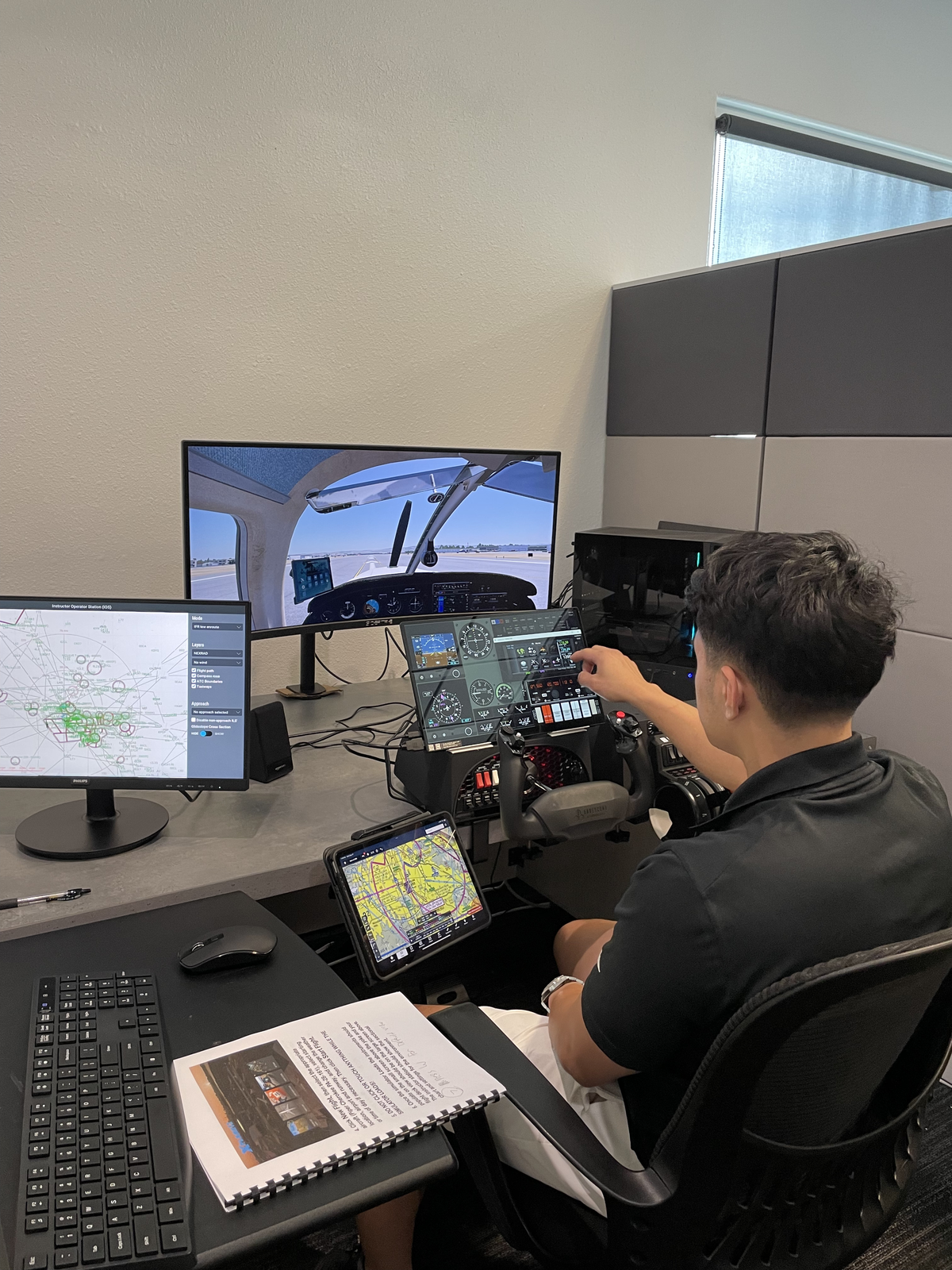
| Dual simulator | Rehearse cockpit flow and teaching cadence | 6 hours |
Thirty days is realistic when you treat CFI training like a full-time job. It assumes you can study daily, fly on schedule, and keep your knowledge sharp through the checkride. If you can only train a few days a week, the same content simply spreads across a longer calendar. The workload does not shrink; it just occupies more weeks.
So the real answer to “how long does CFI training take” is two answers. The structured content is a 30-day academy. The clock you personally run depends on the six things we cover below.
Your Prerequisites Decide Your Start Date
The fastest way to lose weeks is to enroll before you are eligible. CFI training does not start with lesson one. It starts with clearing the FAA gate. Before you begin our CFI course, you should already hold:
- A commercial pilot certificate with an instrument rating.
- A valid FAA 3rd Class Medical Certificate or higher.
- At least 250 hours of logged flight time.
- The ability to read, speak, write, and understand English.
- Age 18 or older to receive the certificate.
If you already meet every item on that list, your start date is essentially now. If you are still finishing commercial training or short on hours, your CFI training timeline really begins with closing those gaps first. Being honest about where you stand today is what keeps the 30-day plan from turning into a 90-day one.
Not sure whether you qualify yet? The CFI training FAQs spell out the prerequisites in plain language, and our team can confirm your eligibility before you commit to a start date.
Week by Week: What a Focused CFI Month Feels Like
No two candidates move at exactly the same pace, but a focused month tends to follow a recognizable rhythm. Here is how the phases stack when you train consistently.
Front end: knowledge and Fundamentals of Instructing. The early days are classroom-heavy. You are learning how people learn, how to structure a lesson, and how to explain a maneuver instead of just flying it. This is where the 104 classroom hours do their work and where your lesson plans start taking shape.
Middle: teaching reps and right-seat flying. As the knowledge settles, the one-on-one ground time and the 14 flight hours take over. You practice teaching stalls, slow flight, landings, and airspace out loud, then move to the right seat and learn to talk, watch, and guard the controls at the same time.
Back end: polish and checkride readiness. The final stretch is about delivery under pressure. You rehearse the oral, tighten your demonstrations, and use simulator time to clean up your words before the airplane demands more attention. Then you are ready for the examiner.
That sequence is why a structured academy usually finishes faster than self-study. When the workload is organized into daily blocks, you spend your energy learning instead of deciding what to study next.
The Variables That Actually Move Your Timeline
Two candidates can start the same academy and finish weeks apart. These are the factors that decide which one you become.
- Training consistency. Daily reps hold knowledge in place. Long gaps force re-learning, and re-learning is the quiet timeline killer.
- Weather. Southern California is kind to flight training, but wind and marine layer days still push flights. A little schedule flexibility protects your month.
- Aircraft availability. Downtime stalls progress. Training around a standardized Piper Warrior fleet means the airplane you prepared in is the airplane you fly.
- Your incoming knowledge. Pilots who arrive with sharp regulations and systems knowledge move quickly. Rust adds days.
- Checkride scheduling. This is the one most students underestimate, so it gets its own section.
Checkride Scheduling Can Add Weeks Nobody Warned You About
You can finish every hour on time and still wait. In many parts of the country, the real bottleneck is the examiner’s calendar. Pilots polish their prep, then sit for weeks waiting for a checkride slot while their knowledge slowly fades. That waiting is invisible when you compare a flight instructor course in Los Angeles on price alone, but it is one of the biggest hidden costs in any timeline.
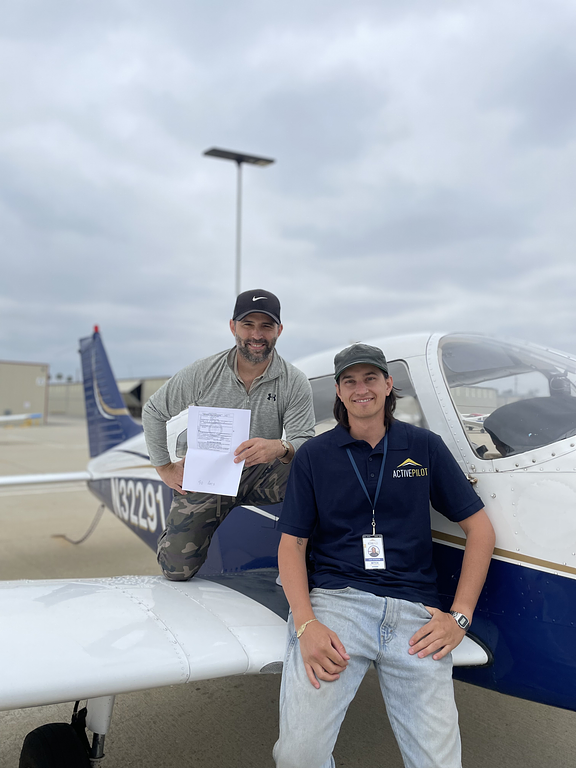
At ActivePILOT, our long-standing relationships with several Designated Pilot Examiners are built to protect that momentum. The advantage is scheduling access, not a shortcut around the standard. You still earn the certificate. But when you finish sharp, we want a checkride date within reach instead of a month of waiting that dulls your edge. When you plan your CFI training timeline, treat examiner access as part of the equation, not an afterthought. Our CFI checkride and hour-building guide goes deeper on preparing for the examiner.
Adding CFII Extends the Path on Purpose
Once you hold the initial CFI, many career-track pilots keep going and add instrument instructor privileges, commonly called CFII. This is not a delay; it is a deliberate investment. CFII training in Los Angeles prepares you to teach instrument students scan, procedures, weather judgment, and missed approaches, which broadens the students you can take and the schools that want you.
If your goal is to instruct as much as possible on your way to the airlines, budget for the extra time now. Building CFII on top of a fresh CFI, while your instrument knowledge is already sharp, is often more efficient than coming back to it months later. It also connects naturally to our Instrument Rating program and the Garmin-equipped training environment you already know.
Where the Timeline Turns Into a Career
For most commercial pilots, the reason the CFI timeline matters is what comes after it: hour building toward the 1,500-hour airline benchmark. Instructing is one of the most common ways to build that time because you earn while you log experience instead of paying for every hour. Exact ATP eligibility involves more than total time, and some pilots follow restricted-ATP paths, but 1,500 hours is the planning target many career-track pilots use.
That is why finishing efficiently is worth so much. Every week you shave off the front end is a week you start building real dual-given time sooner. If your plan is the Zero to 1500 pathway, the CFI month is the hinge the whole career plan turns on.
What It Costs and How You Pay Across the Timeline
A faster timeline should not mean a scary invoice on day one. Our current Certified Flight Instructor program range is $7,759 to $9,480, and we use a pay-as-you-go model so you are not forced into a large upfront deposit before your lessons are flown. You pay for the instruction and aircraft time you actually use as you move through the month.
If you want to move faster without a cash crunch, flight training financing may be available through partners including Stratus Financial, AOPA Financing, and Columbia Bank. Knowing your cost rhythm ahead of time is part of protecting your schedule, because financial stops and starts stretch timelines just like weather does.
Map Your CFI Timeline With Our Team
The short version: CFI training at ActivePILOT is a 30-day academy for prepared, consistent students, and your real 2026 timeline depends on your prerequisites, your training rhythm, and how quickly you reach the examiner. The best way to get an honest date is to start from where you stand today.
Tell us your current certificates, hours, and schedule, and we will map a realistic CFI timeline around your goals. Request information from ActivePILOT and take the next step toward your instructor certificate at Van Nuys.
.0sOCQrdD_ZNLx5N.webp)
.B93hxYof_19tRkW.webp)

.CbLPZiMB_Z2HPxB.webp)

